





Heroin is a depressant drug, known as an addictive and dangerous substance. It is considered an illegal drug due to its negative effects on mental and physical health. There is still a misunderstanding about how heroin affects the brain and body. That’s why it is important to recognize the signs of drug abuse, overdose risks, and the need for a structured rehab program.
✨ Highlights:
- Heroin is a depressant drug, not stimulant.
- It suppresses breathing and slows down the central nervous system.
- Long-term heroin use results in addiction and health risks.
- Call at (844)717-7069 for safe heroin recovery.
What is Heroin?
Heroin is an illegal opioid substance derived from morphine of the opium poppy plant. It is commonly available as a brown or white powder. There is also a sticky black substance, which is known as black tar heroin.
People use heroin through snorting, smoking, and injecting. Heroin instantly enters the brain to produce the intense effects, which can be pleasurable and risky for individuals.
Is Heroin A Depressant Or A Stimulant?
Heroin is a depressant drug that can slow down the central nervous system of individuals. The users feel euphoria initially, but the overall effect is suppressive and sedative. Underestimating the addictiveness of heroin can lead to serious risks, including effects on breathing.
Consider the Evidence-Based Treatments for Depressant or Stimulant Addiction from the House of Zen.
How Does Heroin Work in the Brain?
Heroin quickly enters the brain and blood while converting back into morphine. It binds to the opioid receptors, which are responsible for controlling:
- Breathing
- Pain
- Heart rate
- Pleasure
Immediate Effects
There is an initial rush for individuals who use heroin. When heroin activates the opioid receptors, it leads to:
- Dry mouth
- Intense euphoria
- Mental cloudiness
- Warm skin flushing
- Highly active limbs
The users experience different effects after the rush. These effects place heroin in the category of depressant drugs.
- Slurred speech
- Slowed breathing
- Drowsiness
- Extreme relaxation
Why Does Heroin Provide Stimulating Feelings Initially?
Is heroin a stimulant or a depressant? Heroin is a depressant and cocaine is stimulant, but individuals misunderstand that heroin is a stimulant due to the initial rush. It is an immediate surge of pleasant feelings that individuals feel after the use. A quick release of dopamine in the brain leads to this sensation.
The initial rush is short-lived, which is followed by heavy sedation. However, this rush does not increase alertness or energy for users. Heroin does not improve physical activity or mental clarity like the stimulants. It can suppress the normal body and brain functions.
What are the Short-Term Effects of Heroin Addiction?
Heroin is a depressant drug that produces instant effects to slow the body down. The unpredictable effects vary depending on the administration method, dosage, and purity. On experiencing effects, you need to consider a personalized heroin addiction treatment for smooth recovery without experiencing effects. The physical and mental effects of heroin use are as follows:
| Physical Effects | Mental Effects |
| Constricted pupils | Euphoria |
| Flushing and itching | Numbness or calmness |
| Vomiting and nausea | Impaired judgment and confusion |
| Decreased heart rate | Decreased awareness of the surroundings |
| Slow breathing | Concentration difficulty |
What are the Long-Term Effects of Heroin Addiction?
Heavy or repeated use can lead to serious effects on mental and physical health. The brain becomes dependent on heroin use for normal functions. That’s why quitting heroin is difficult without structured treatment.
The Deadly Depressant Effect on Individuals
Heroin overdose is a dangerous aspect that affects the individual’s breathing. Chronic or heavy use leads to fatal overdose. It can stop breathing completely by reducing the oxygen supply to the brain. This respiratory failure is the main cause of death due to the heroin overdose.
The signs of heroin overdose include:
- Clammy and cold skin
- Choking or gurgling sounds
- Unconsciousness
- Blue fingernails or lips
- Stopped or slow breathing
Get in Touch with the Licensed Addiction Specialists for Structured and Smooth Recovery.
What are the Risks of Mixing Heroin with Other Depressants?
Mixing heroin with different depressant substances like alcohol, benzodiazepines, and sleep medications increases the dangers of death. It is important to consider that mixed substances compound each other’s effects. The use of mixed substances can lead to severe respiratory depression even if individuals use the lower doses.
Is Heroin An Addictive Drug?
Yes, heroin is an addictive substance because dependence develops quickly. The brain becomes dependent on heroin use quickly. Tolerance is also built, which requires individuals to take higher doses. Users also experience the painful and intense withdrawal symptoms.
Heroin withdrawal is rarely life-threatening due to its severity, which urges individuals to continue use without considering treatment. The withdrawal symptoms of heroin use include:
- Diarrhea and nausea
- Insomnia
- Agitation and anxiety
- Severe craving
- Bone and muscle pain
💡 Did You Know
Opioid depressants have a significant role in drug-related deaths across the world.
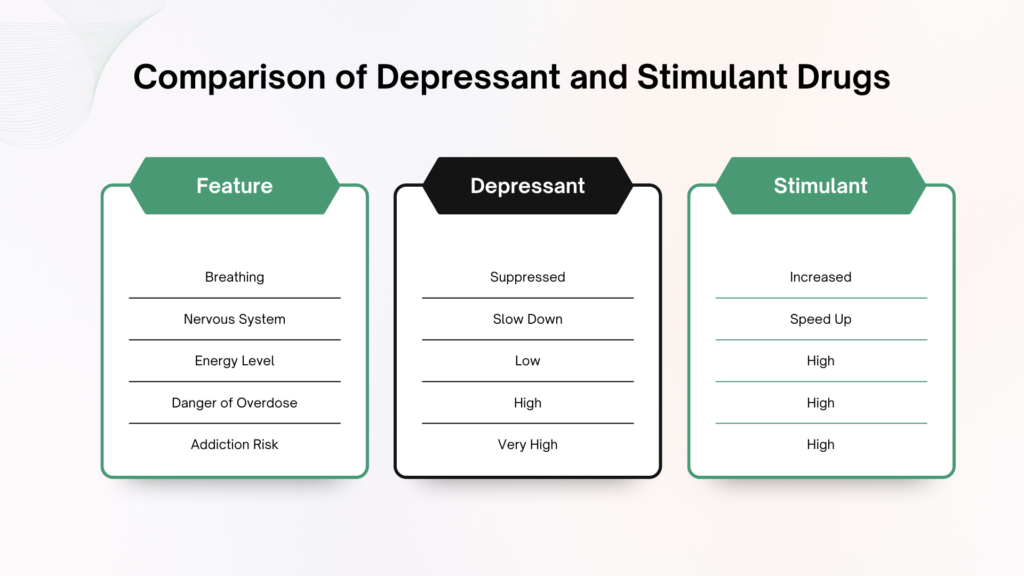
Comparison of Depressant and Stimulant Drugs
Breathing
Heroin is a depressant that affects the respiratory system and suppresses breathing. The main reason for a heroin overdose is stopped or slowed breathing. On the other hand, stimulants boost the breathing rate because the body needs more oxygen due to the increased activity.
Nervous System
Is heroin a downer? Yes, heroin is a downer that can easily slow down the central nervous system due to depressed body and brain functions. It leads to relaxation, sedation, and minimal awareness. Stimulants increase the activity of the nervous system, making the body and brain more active and alert.
Energy Level
As a depressant, heroin reduces the energy level, leading to extreme drowsiness in the body. Individuals become unresponsive, detached, or slowed after using heroin. On the other hand, stimulants boost both alertness and energy level. That’s why individuals feel unstable, restless, or hyper-focused.
Danger of Overdose
The slowed or stopped breathing leads to respiratory failure, causing a heroin overdose. A small dose of heroin can become fatal for users when it is combined with other depressants. Stimulant overdose usually involves strokes or heart attacks. It can also dangerously boost the body temperature.
Addiction Risk
There is an extreme addiction potential for heroin because it quickly alters brain chemistry, leading to intense physical dependence. It is true that withdrawal symptoms force individuals to continue heroin use despite the negative effects. The physical dependence of stimulants develops differently, which involves overwhelming use patterns and psychological craving.
What are the Warning Signs to Consider Heroin Use Treatment?
Recovery is easily achievable because professional help is available for individuals struggling with heroin addiction. The warning signs include:
- Increased isolation
- Loss of control over use
- Continuous use despite consequences
- Withdrawal symptoms
Get Professional Help for Smooth Recovery from Depressant Addiction
Is heroin a stimulant or a depressant? Heroin is a depressant drug with dangerous side effects on mental and physical health. Individuals can face serious health challenges when it is abused or mixed with other drugs. You can get professional help from the House of Zen, whether you or someone you love is struggling with heroin addiction. Let’s contact us to start your recovery journey today!
Frequently Asked Questions and Answers
Let’s get answers to commonly asked questions about whether heroin is a stimulant or a depressant drug.
Is heroin an upper or a downer?
Heroin is a downer that is known for slowing down the central nervous system and offering relaxation.
What type of drug is heroin stimulant or a depressant?
Heroin is a depressant drug that can slow down the functions of both body and brain, leading to sedation.
Are there treatment centers specializing in heroin addiction and its depressant effects?
Yes, House of Zen is a treatment center specializing in treating heroin addiction and its depressant effects.
What are the effects of heroin compared to common stimulants?
Heroin slows down the bodily functions, while common stimulants are popular for speeding up the functions.
What are the treatment options for the heroin depressant drug?
Inpatient and intensive outpatient programs are available treatment options for treating heroin addiction.
Does the House of Zen provide depressant addiction treatment?
Yes, the House of Zen provides personalized treatment with evidence-based therapies for a smooth recovery experience.
