


Substance addiction recovery may seem like a difficult journey that brings challenges at every stage of the treatment. Understanding the barriers to addiction treatment is essential when you want to recover completely with a reduced risk of relapse. Get help from the House of Zen rehab center to overcome these barriers and sustain the long-term recovery.
✨ Highlights:
- Understanding barriers to addiction treatment encourages you to seek professional help.
- Denial, social environment, mental health, and stigma are common barriers.
- Stress triggers and accessibility problems also restrict you from seeking treatment.
- Don’t hesitate to receive the personalized treatment from the House of Zen LA.
Understanding Substance Use Disorder
Before exploring barriers to recovery, it is important to understand substance abuse. Substance addiction is a complex condition involving the need for more use, intense craving, and side effects. The changes in the brain may lead individuals to alcohol and drug addiction. Understanding substance addiction is necessary to overcome the barriers to treatment.
Are Barriers Keeping You Away from Achieving and Maintaining Substance Abuse Recovery?
Schedule an appointment and get help to overcome the barriers to addiction treatment to maintain long-lasting sobriety.
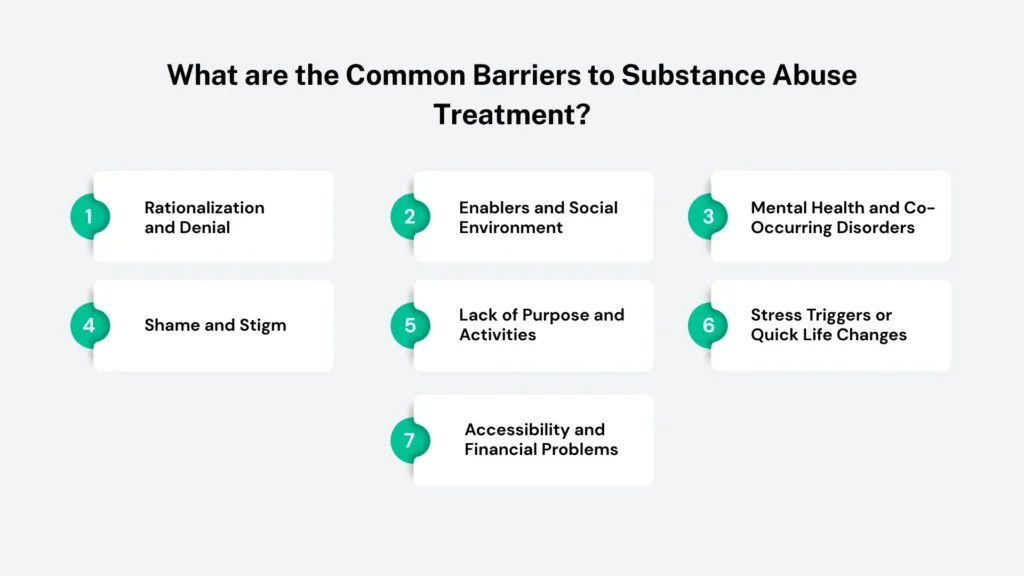
What are the Common Barriers to Substance Abuse Treatment?
The treatment barriers for substance use disorder (SUD), including alcohol addiction treatment, may vary based on the individual’s condition. Cost, stigma, geographical location, and co-occurring disorder are the most common barriers to addiction treatment in Los Angeles, California.
Rationalization and Denial
Denial is the most powerful factor when you are trying to overcome distress. People struggling with addiction usually deny their habit or the severity of it. Rationalization also contributes to the treatment challenge, making recovery difficult for individuals. Individuals think that it’s easy to stop addiction whenever they want.
Overcoming the denial of substance addiction requires perspective changes. Individuals may need to work on their personal goals, counseling, and intervention to overcome the substance use disorder. It is important to consider changing thinking patterns and behaviors. Cognitive behavioral therapy is an effective approach to overcoming addiction denial.
Enablers and Social Environment
It is crucial to understand that the social environment is another factor affecting the addiction recovery process. Societal norms, family, and friends are the influential factors that lead people to substance addiction. The recovery journey may become more challenging due to factors enabling destructive behaviors.
Understanding the enabling behavior is necessary to overcome barriers to treatment for substance abuse. It is a good strategy to avoid the social circles that usually encourage addiction and develop new addiction-free ones. The structured support systems, such as a 12-step program or group therapy. These programs provide a new influence to avoid addiction.
Mental Health and Co-Occurring Disorders
Substance use disorder is commonly associated with mental health disorders, including anxiety and depression. The most difficult aspect of addressing substance abuse is the co-occurring disorder. Self-medication through substance use may cause different mental health conditions.
Integrated or dual diagnosis treatment is an effective approach to address the co-occurring disorders. The specialized intervention is used to handle both mental health and substance use disorders at the same time. Support groups, therapy sessions, and medication are effective for managing the co-occurring disorders.
Shame and Stigma
The immense shame and societal stigma connected with addiction restrict individuals from getting the structured help for lasting recovery. Individuals usually hesitate to seek professional help due to societal pressure. They also make themselves isolated due to the fear of judgment, while not getting the immediate help.
Community effort is needed to break the stigma linked with substance addiction. Education and open discussion about addiction offer a supportive environment to overcome barriers to substance abuse treatment. Trauma-informed therapy and self-compassion are ideal for addressing the root causes of stigma and shame.
Lack of Purpose and Activities
Addiction usually takes individuals away from their daily activities and life purposes. The lack of a purposeful activity may force individuals to start consuming substances. It is a fact that having no direction in life may lead to relapse because individuals feel no purpose in their lives other than substance use disorder.
Recovery is a journey of discovering the purpose and joy in life without using alcohol or drugs. Individuals may need to engage in activities that involve setting life goals, offering fulfillment, and volunteering. Cognitive restructuring is also a helpful approach for individuals to view their lives in a meaningful manner.
Stress Triggers or Quick Life Changes
Life is full of challenges, even if you are progressing well in the recovery journey. Sudden life changes and stress triggers are examples of barriers to treatment. Health challenges, relationship problems, and job loss may influence the stress triggers. These triggers can easily make it difficult for individuals to maintain sobriety.
Developing a healthy mechanism is essential to having a strong personal resilience towards substance addiction. There are different effective techniques, such as regular exercise, stress management, and mindfulness, that help individuals address the triggers without using alcohol and drugs. The strong support and contingency plan allow individuals to deal with stressors.
Accessibility and Financial Problems
Transportation problems, distant treatment facilities, and long waiting lists make the rehab for addiction a difficult journey. That’s why individuals may not be able to access the treatment in time for a smooth recovery. The inability to pay for treatment or having no insurance coverage for treatment also makes rehab accessibility difficult.
It is important to reduce the financial stress and talk to the insurance provider about the treatment coverage. Exploring financial options such as scholarships, government-funded options, sliding-scale payment, and loans makes the treatment easily accessible for individuals. Reducing the waiting list and transportation also contributes to accessibility.
💡 Did You Know
According to the PMC study, there are 7 structural barriers, 21 individual barriers, and 19 social barriers that are restricting individuals from seeking help.
How to Overcome Barriers to Treatment for Substance Abuse
Taking the first step to overcome the barriers is necessary when you are aiming to achieve recovery and reduce the chances of relapse. Medical support is an effective option when you are struggling with addiction. House of Zen LA offers inpatient treatment and an intensive outpatient program to help you take control of your life.
The certified professionals are always ready to assist you with the smooth admission process and detox program for the initial diagnosis. We offer a structured treatment plan based on the individual’s condition to ensure a lasting recovery experience while overcoming the treatment obstacles.
Seeking Professional Help is the First Step to Break the Addiction Treatment Barriers
House of Zen LA is ready to help you when you are looking to overcome the rehab barriers and achieve sobriety.
Tackle the Barriers to Addiction Treatment With the Help of House of Zen LA
When you are aware of barriers to avoiding drugs, seeking personalized treatment should be a priority. Whether you are struggling with alcohol addiction or drug addiction, we are here to help you overcome the dependency. Let’s verify insurance and break the barriers to addiction treatment!
Common Questions and Answers About Barriers to Addiction Treatment
Here are the answers to the frequently asked questions about barriers to substance abuse treatment.
What are the most common barriers to addiction treatment?
Denial and rationalization, enablers and social environment, mental health and co-occurring disorders, stigma and shame, lack of purpose and activities, stress triggers or life changes, and accessibility are the most common barriers to addiction treatment.
What is the most powerful addiction treatment barrier?
Denial is one of the most powerful barriers to substance abuse treatment because individuals are not ready to accept the fact that they are struggling with addiction.
How does the cost barrier prevent individuals from recovery?
Having no money to pay for treatment or no insurance coverage is also a prominent barrier that prevents individuals from recovery because they can’t access the best private rehab services.
How is stigma a barrier to substance abuse treatment?
Individuals usually don’t seek professional help for addiction due to societal pressure and the fear of judgment. Overcoming the stigma is an essential step to achieving long-term recovery.
Is professional help required to overcome the addiction rehab barriers?
Yes, professional help is required to overcome the addiction rehab barriers because certified professionals help you to focus on the recovery journey rather than thinking about the treatment barriers.
Who provides effective support for substance addiction treatment?
House of Zen provides effective support for substance addiction treatment in Los Angeles, California. You can contact us and discuss the treatment barrier with the licensed professionals to start the treatment journey.