




Inpatient vs outpatient rehab requires patients to stay within the treatment center for 24/7 support, while outpatient rehab allows patients to live at home and visit the treatment center for rehab. Inpatient drug treatment is a full-time treatment option with ongoing support. On the other hand, outpatient drug treatment is a flexible option to manage daily responsibilities alongside rehab.
✨ Highlights:
- Inpatient vs outpatient rehab offers 24/7 clinical and medical supervision.
- Outpatient treatment provides flexibility to the individuals.
- The effectiveness of treatment depends on the level of addiction severity.
- Outpatient rehabilitation is a step-down from inpatient rehab.
What is Inpatient Drug Rehab?
Inpatient vs outpatient drug rehab, also known as residential treatment, is ideal for individuals who can stay in a rehab center for smooth recovery. The individuals receive 24/7 structured support, therapy, and medical care in a medically supervised environment.
Inpatient drug treatment protects individuals from the stressors and triggers of the external environment contributing to drug addiction. This residential treatment option allows individuals to focus on their recovery under the supervision of the experienced staff.
Features of Inpatient Rehabilitation
Exploring the key characteristics of an inpatient program is essential when you are considering residential rehab for streamlined recovery without the interruption of the external environment. Let’s take a look at the features of inpatient rehab vs outpatient rehab:
- Structured treatment schedule
- Detoxification service
- 24/7 medical supervision
- Family, group, and individual therapy
- Ideal peer support
- No access to alcohol or drugs
What is Outpatient Drug Rehab?
Outpatient vs inpatient rehab is ideal for individuals who want to stay at their homes and attend the scheduled treatment at the rehab center. It is important to note that the outpatient treatment programs can vary in intensity from a few hours a week to daily scheduled care.
- The Standard Outpatient Program (OP) consists of 1 to 3 sessions each week.
- Intensive Outpatient Program (IOP) includes the treatment sessions of 9 to 20 hours per week.
- Partial Hospitalization Program (PHP) requires patients to attend treatment sessions of 20 to 30+ hours every week.
Features of Outpatient Rehabilitation
It is crucial to explore the characteristics of the outpatient treatment when you are looking to receive scheduled rehab while fulfilling your daily responsibilities. Let’s take a look at the features of the outpatient rehabilitation:
- Live at home and receive rehab sessions
- Flexible treatment schedule
- Individual and group therapy
- Family involvement in treatment
- Ideal step-down care
- Ongoing support without disrupting routine
Feeling It Difficult to Decide Whether You Need Inpatient or Outpatient Rehab?
Compare treatment programs or contact the House of Zen to choose tailored rehab based on your needs.
Key Differences of Inpatient Treatment vs Outpatient Treatment
Let’s understand the differences between inpatient and outpatient rehab:
| Factor | Inpatient Treatment | Outpatient Treatment |
| Living Arrangement | Rehab center | Home |
| Supervision | 24/7 clinical and medical | Only scheduled |
| Rehab Intensity | High | Moderate to high |
| Flexibility | No | Yes |
| Ideal for | Severe addiction | Mild to moderate dependency |
What are the Benefits of Inpatient vs Outpatient Drug Rehab?
It’s important to consider the advantages and disadvantages of both inpatient and outpatient drug rehab programs. Understanding the benefits of treatment options helps you decide on the ideal rehab based on your condition.
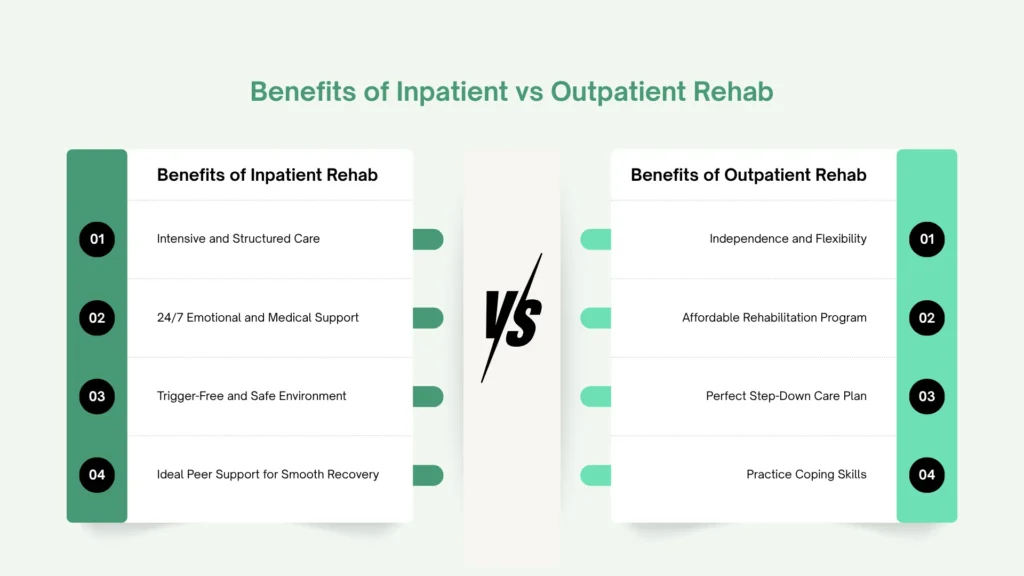
Benefits of Inpatient Rehab
There are a number of benefits of inpatient vs outpatient rehab that encourage individuals to consider the residential treatment for their severe addiction. These advantages of the inpatient treatment ensure stable care with continuous support.
- Intensive and Structured Care
The residential treatment plan includes structured and intensive care for smooth recovery. This rehabilitation consists of wellness activities and therapeutic sessions for individuals struggling with a chaotic lifestyle or self-discipline.
- 24/7 Emotional and Medical Support
The qualified and certified professionals are available to help individuals manage emergencies, mental health conditions, and withdrawal symptoms. Inpatient rehab vs outpatient rehab is an ideal and safe rehab option for individuals with severe substance use disorders.
- Trigger-Free and Safe Environment
The safe and secure environment ensures that individuals have limited access to alcohol and drugs. This environment protects patients from external triggers and reduces relapse risk during the recovery journey.
- Ideal Peer Support for Smooth Recovery
Living with individuals within the rehabilitation center during inpatient treatment vs outpatient treatment ensures emotional support and accountability. Shared experiences or peer support also play a key role in long-term recovery.
Benefits of Outpatient Rehab
Outpatient treatment vs inpatient treatment is a flexible treatment option for individuals struggling with mild to moderate addiction. This treatment service offers several benefits to people who want to maintain their daily responsibilities and receive tailored rehab.
- Independence and Flexibility
Outpatient treatment is an ideal rehabilitation program for individuals looking to attend their school or continue work. That’s why individuals can receive their treatment independently while taking care of their family.
- Affordable Rehabilitation Program
Outpatient vs inpatient rehab is an affordable treatment option for individuals with mild to moderate addiction. This treatment option has become more accessible for patients due to the insurance coverage.
- Perfect Step-Down Care Plan
Individuals who have completed inpatient treatment can consider outpatient rehab as a step-down care to continue their recovery. It is an ideal choice to prevent relapse and ensure long-lasting recovery.
- Practice Coping Skills
Patients can practice real-world coping skills in different life phases. The rehab professionals provide professional support and guidance to every individual during the recovery. Real-world application of coping strategies boosts individuals’ confidence.
Who Should Prefer an Inpatient Rehab Program?
Inpatient rehab vs outpatient rehab is an ideal option for individuals who have long-term or severe substance use disorder. It is perfect for people experiencing frequent relapse and who require medical detox to streamline the treatment.
Inpatient drug treatment is suitable for individuals struggling with co-occurring mental health conditions. That’s why dual diagnosis treatment is ideal for stabilization from mental and substance use disorders. The residential rehab is a reliable option for people with self-harm or overdose risks.
Who Should Prefer an Outpatient Rehab Program?
Outpatient drug treatment is ideal for individuals with mild to moderate addiction who are medically stable. They have strong social and family support to continue their treatment and daily responsibilities without experiencing any serious complications.
Outpatient vs inpatient rehab offers flexibility for school or work. This step-down treatment is ideal for individuals transitioning from inpatient rehabilitation. Individuals who are highly motivated for addiction recovery.
Inpatient Drug Treatment VS Outpatient Drug Treatment: Which Is Effective?
Both are effective rehab options based on individuals’ needs when comparing inpatient treatment vs outpatient treatment. The success of treatment depends on the level of addiction severity, treatment timeline, aftercare support, and the individual’s motivation.
It is important to consider that effectiveness is improved by continuous therapy and a support group. There are also transitional housing or sober living options for individuals struggling with addiction. Continuous mental care improves the effectiveness of drug rehab.
💡 Did You Know
The risk of relapse is reduced by combining the support groups and the aftercare program for inpatient or outpatient treatment.
Inpatient VS Outpatient Rehab for Dual Diagnosis
Inpatient treatment is recommended for individuals experiencing mental health and substance use disorders. That’s why inpatient rehab is a perfect option due to medication management and an integrated care plan. On the other hand, an outpatient rehab program is suitable as a step-down care for individuals transitioning from an inpatient treatment plan.
How Long Do Inpatient and Outpatient Treatment Programs Last?
Outpatient and inpatient depression treatment and addiction treatment can vary in duration for long-term recovery. It is important to note that a longer treatment timeline is associated with better recovery results.
- Inpatient rehab usually lasts 28, 60, or 90 days based on the addiction severity and individuals’ needs.
- A standard outpatient treatment has a common duration of 8 to 12 weeks, and PHP/IOP includes a timeline of 3 to 6 months with ongoing support.
Confidential and Immediate Support is Available
Every step of recovery matters, and professional help is available for smooth rehabilitation.
Inpatient VS Outpatient Rehab: Get Help Now from the House of Zen
Not a single treatment option is perfect for people struggling with different levels of addiction severity. Inpatient vs outpatient rehab offers structured and intensive care in a medically supervised environment. Outpatient rehab offers flexibility while allowing individuals to continue their responsibilities. Let’s get help from the House of Zen LA, whether you need inpatient or outpatient treatment!
Answers to People Also Asked Questions
Let’s explore the questions and answers related to inpatient vs outpatient rehab.
What is the difference between inpatient rehab and outpatient rehab?
The difference between inpatient rehab and outpatient rehab is that inpatient treatment offers 24/7 support in a medically supervised environment, while outpatient treatment offers flexibility.
Is rehab considered inpatient or outpatient?
Rehab is considered inpatient when individuals stay within a treatment center for recovery, and rehab is considered outpatient when individuals visit a treatment center for scheduled treatment.
Why would someone go to inpatient rehab?
Someone who needs the intense and structured support for severe addiction would go to inpatient rehab.
How long can a patient stay in inpatient rehab?
A patient can stay in inpatient rehab for 28, 60, or 90+ days based on the medical and addiction history.
Who needs outpatient treatment?
Individuals who have less severe addiction and want to fulfill their daily responsibilities need outpatient treatment as a step-down care.
Is inpatient rehab more effective?
Inpatient rehab is more effective than outpatient treatment due to the intense care for severe addiction.
