


Watching yourself or your loved ones struggling with alcohol addiction may feel exhausting and heartbreaking. You may feel helpless and afraid to help someone with alcoholism because it can damage relationships. Therefore, you need to consider how to help an alcoholic with structured support from the House of Zen for long-term sobriety.
✨ Highlights:
- Alcoholics push away due to fear of judgment and withdrawal, and emotional instability.
- Help an alcoholic by choosing the ideal time to talk, listening to them, and preferring compassion.
- Don’t humiliate or control them if your loved ones are struggling with alcohol addiction.
- Consider the personalized treatment from the House of Zen to recover from alcohol use disorder.
Understanding Alcohol Use Disorder (AUD)
Alcohol use disorder is a serious medical condition in which an individual loses control over drinking. It can be from mild to severe, which usually affects daily life, relationships, physical health, and mental health. Alcohol addiction may lead to dependence and craving. That’s why it becomes hard to stop drinking without professional support.
Want to help someone who is struggling with alcoholism?
Get help from the House of Zen today for personalized care to support someone struggling with alcohol addiction.
Common Signs Someone Needs Help for Alcoholism
Recognizing the warning signs is important when you are looking for how to help someone with alcoholism. The most common signs someone is going through alcoholism are:
- Drinking alone or hiding alcoholism
- Depression, irritability, or mood swings
- Failed attempts to stop alcohol use
- Ignoring responsibilities or work
- Legal or financial issues due to drinking
- Relationship problems caused by alcoholism
💡 Did You Know
Millions of individuals are struggling with alcohol use disorder (AUD), and an estimated 1 in 10 children have a parent with AUD.
Why Do Alcoholics Push Loved Ones Away?
Alcohol addiction may affect physical health, relationships, and emotions. Several individuals struggling with alcohol use disorder may isolate themselves due to emotional instability and fear of shame.
Fear of Shame or Judgment
Several individuals struggle with alcoholism while feeling embarrassment and guilt. They can become defensive when the conversation becomes aggressive or critical. Moreover, shame makes it difficult for them to admit the need for help.
Emotional Instability and Loss of Control
Alcohol consumption may change how the brain can process decisions and emotions. It may lead to impulsive behavior, denial, or anger. Individuals also feel emotional distancing from friends and family. Therefore, addiction may make healthy communication challenging.
Fear of Withdrawal or Change
Some individuals avoid alcoholism treatment due to the fear of alcohol withdrawal symptoms. They may worry about the judgment or loss of sense. It is important to understand the fear and consider compassion when you are exploring how to help an alcoholic friend.
How to Help an Alcoholic Stop Drinking Without Pushing Away
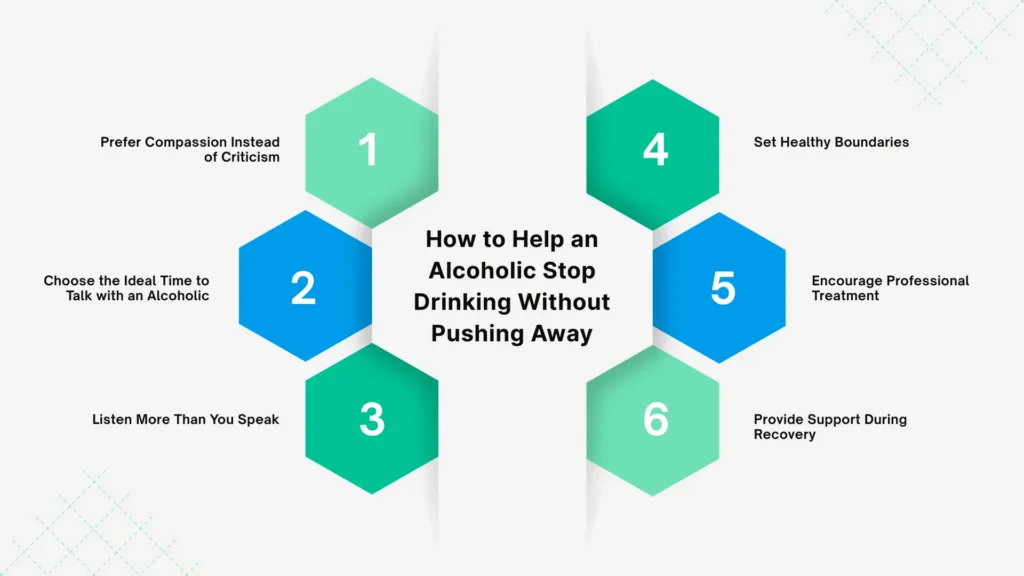
Helping someone with alcoholism needs healthy communication, emotional balance, and patience. The primary purpose is to support long-term recovery without creating emotional distance, shame, or conflict. Meaningful conversations and boundaries are ideal for learning how to support an alcoholic.
Prefer Compassion Instead of Criticism
It is important to consider how you speak to a person who is experiencing side effects of alcohol use. You need to focus on the concern rather than accusing or blaming the alcoholic. That’s why you need to emphasize that you are worried about their health and want to help them. A supportive and calm approach may work more effectively than arguments.
Choose the Ideal Time to Talk with an Alcoholic
Avoiding serious conversations is necessary when a person with alcohol use is angry or intoxicated. You need to wait for a calm moment when the person is ready to listen. The distraction-free and private conversations offer a safe environment for honest communication about alcohol dependence.
Listen More Than You Speak
Individuals struggling with alcohol addiction may feel misunderstood or unheard. It is important to give them space to talk openly about the emotional pain, anxiety, trauma, and stress. Listening without immediate interruption or judgment may reduce resistance while building trust.
Set Healthy Boundaries
When you are considering how to help someone stop drinking, it is crucial to understand that you must not accept the harmful behavior. Setting healthy boundaries may protect you and an individual struggling with addiction.
You may not give money for alcohol and refuse to cover up their harmful behavior. It is important to avoid situations that are abusive or unsafe. These boundaries protect your mental health while encouraging accountability.
Encourage Professional Treatment
Alcoholism is hard to overcome without professional alcohol addiction treatment from the House of Zen. The structured treatment offers medical care, therapy, and relapse prevention support.
The treatment options for alcoholism may include the detox program, inpatient rehab, intensive outpatient program, and therapy sessions. You need to encourage individuals to seek treatment gently rather than forcing them.
Provide Support During Recovery
Recovery is a long-term process that requires significant time to achieve sobriety. Emotional encouragement is an important factor that helps individuals to stay motivated during their treatment journey.
Family therapy sessions and healthy routines are ideal when you are considering how to help someone with alcohol addiction. It is an ideal approach to celebrate the progress and milestones while being patient during the relapse. Encouragement and consistency are helpful resources for individuals struggling with alcohol dependence.
Need professional support to overcome alcohol addiction?
Schedule an appointment and start the recovery journey.
Things You Should Avoid When Helping Alcoholics
When you are looking for how to confront an alcoholic with the intent of helping, it is possible that unintentional things may make the condition worse. Controlling behavior, enabling, or harsh communication may damage trust while increasing resistance. That’s why it is necessary to understand what to avoid when trying to create a supportive and healthy recovery path.
Don’t Humiliate Them
Public embarrassment, threat, and insult may increase the feelings of hopelessness and guilt. This behavior may push individuals deeper into the addiction instead of motivating them toward recovery. Supportive honesty instead of harsh criticism contributes to long-term sobriety.
Avoid Enabling Behavior
Enabling is an unintentional approach to protecting loved ones from the consequences of alcohol addiction. It includes making payments for alcohol-related debts and making excuses to employers. The constant rescuing of individuals from problems caused by alcoholism is also an enabling behavior. That’s why removing accountability may delay the recovery journey.
Don’t Try to Control Recovery Journey
It is not a good approach to try to control the recovery journey for individuals. You can focus on encouragement because recovery is an individual’s own decision. It is important to focus on the healthy boundaries and support rather than control.
When to Consider Professional Intervention
It becomes difficult to manage serious situations without professional help. The intervention may become necessary when alcohol use starts to affect daily obligations, mental health, and safety. Early help is ideal for treating severe health complications while improving treatment success.
Signs for Immediate Intervention
Professional intervention is required when alcohol use may become severe or life-threatening. The warning signs include alcohol poisoning, violent behavior, suicidal thoughts, severe depression, driving under the influence, and serious health problems.
How Intervention Works
It is a structured conversation where loved ones motivate individuals for treatment with the guidance of a professional addiction specialist or interventionist. The goal is to help a person recognize addiction as a serious problem and accept the treatment.
Treatment Options for Alcohol Addiction
An alcoholism treatment program is not the same for everyone struggling with alcohol addiction. There are different levels of care based on the mental health requirements, severity of addiction, and lifestyle. The professional treatment includes emotional and medical support to ensure long-term sobriety.
Medical Detox Program
Detoxification programs allow individuals to manage the alcohol withdrawal symptoms safely under medical supervision. The certified professionals assist individuals in the detox program for severe alcohol dependence. It also acts as a first step for how to get an alcoholic to stop drinking.
Inpatient Program (IP)
Residential rehab program that offers 24/7 support to individuals struggling with severe addiction. This inpatient program includes personalized treatment and therapy in a structured environment for long-lasting sobriety.
Intensive Outpatient Program (IOP)
An intensive outpatient treatment offers structured care to individuals while allowing them to continue their daily obligations. This treatment program is ideal when you are struggling with moderate addiction and can’t cut off from responsibilities.
Dual Diagnosis Treatment
Several individuals experience PTSD, trauma, depression, or anxiety when struggling with alcohol addiction. They need to consider dual diagnosis treatment that addresses the mental health problems and addiction at the same time for smooth recovery.
Aftercare Support Program
We offer ongoing support to individuals, helping them maintain long-term recovery without relapsing. This aftercare support is ideal for those who need support after completing the formal treatment.
Consider alcohol addiction treatment programs from the House of Zen to help your loved ones struggling with alcoholism.
How to Help an Alcoholic By Scheduling an Appointment at House of Zen
How do you help an alcoholic? You can help an alcoholic with confidential and structured treatment. This is how to help an alcoholic family member for long-lasting recovery. You can also consider professional help from the House of Zen to overcome alcohol addiction. Let’s schedule an appointment today and start the recovery journey.
Frequently Asked Questions Answered for How to Help an Alcoholic
Here are the answers to common questions about how to help an alcoholic.
Can you help an alcoholic who doesn’t want help?
You can help an alcoholic who doesn’t want help by setting up clear boundaries, avoiding enabling behavior, and offering support.
What are three things a person can do to help an alcoholic?
You can recognize signs of alcoholism, talk to someone about drinking, and encourage the individual for treatment.
What are the 4 stages of alcoholism?
Pre-alcoholic, early, middle, and end are the 4 stages of alcoholism. An individual starts alcohol use to cope with stress that results in emotional, social, and physical consequences.
How to deal with alcoholic behavior?
You don’t blame yourself, protect yourself, talk to someone, don’t cover bad behavior, avoid negotiations, and be honest to deal with alcoholic behavior.
How to convince an alcoholic to quit?
To convince an alcoholic to quit, it is necessary to recommend activities that do not include drinking alcohol.
How to give an alcoholic an intervention?
You can give an alcoholic an intervention with the help of a rehab center like the House of Zen that specializes in the alcohol use disorder treatment.