






Cocaine is a powerful central nervous system stimulant that produces short-term, intense effects. So, how long does cocaine stay in your system? Cocaine leaves the body quickly, but its byproduct metabolites may remain detectable for approximately 4 days in urine for occasional users. However, a hair follicle test offers an extended window of up to 90 days. The exact cocaine detection window depends on factors like drug test type, amount, frequency of use, method of consumption, metabolism, and overall health.
✨ Highlights:
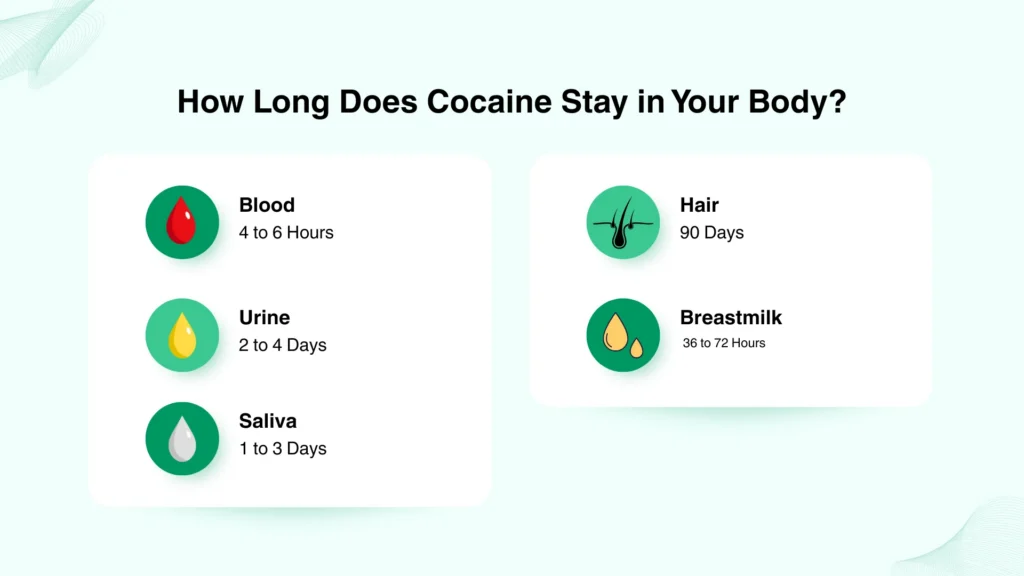
- Cocaine can stay in the bloodstream for up to 4-6 hours.
- The duration of cocaine in urine is around 2 to 4 days.
- The timeline of cocaine in saliva is approximately 1-3 days.
- Cocaine remains detectable in hair for 90 days.
What is Cocaine?
Cocaine is a highly addictive drug derived from the leaves of the coca plant. As cocaine is a stimulant drug boosts the dopamine level in the brain to produce intense euphoric feelings and confidence while increasing alertness and energy. The effects of cocaine can wear off fast, urging individuals to use it again, which may lead to physical dependence and overdose risks.
How Is Cocaine Metabolized in the Body?
Cocaine is quickly absorbed into the bloodstream after entering the body. It is often distributed to different organs such as the liver, heart, and brain. The liver plays a major role in breaking down cocaine into metabolites like ecgonine methyl ester and benzoylecgonine. These metabolites last longer than cocaine itself. Most cocaine is usually eliminated from the body through urine and a small amount through sweat, feces, and saliva.
What are the Immediate Effects of Cocaine Depending on the Consumption Method?
The method of consumption affects how quickly the effects of cocaine addiction start. The use of cocaine in different ways also diversifies the intensity of effects and duration.
- Smoking Crack Cocaine: Smoking coke may lead to higher blood pressure and irregular heart rate. The effects are felt within 5 to 10 seconds and last for 20 minutes.
- Snorting Cocaine: Snorting a drug can damage the nose, palate, and sinuses. The effects normally appear within 3 to 5 minutes and persist for approximately 20 minutes.
- Intravenous Use: Injecting cocaine may slow blood flow while increasing blood pressure and heart rate. The effects start within 5-10 seconds with a 20-minute timeline.
- Oral Ingestion: Eating or swallowing can lead to overdose, systemic toxicity, and health complications. Effects are experienced within 10-30 minutes and last for 90 minutes.
💡 Did You Know
Coke, coca, blow, flake, snow, and crank are the street names of cocaine.
How Long Does Cocaine Last in the System?
Cocaine is a fast-acting stimulant that provides a quick, short-term high to users. A cocaine high may last for 5 to 30 minutes, depending on the method of consumption. Snorting is the most popular method of using cocaine and the slowest approach of ingestion. Injecting and smoking provide a high within approximately five minutes.
How Long Does Cocaine Stay in Your Body?
Cocaine may stay in your body for approximately 2 to 4 days in urine for occasional users. However, the exact duration of cocaine in the system often depends on the frequency of use and the type of drug test. You should note that the timeline of coke in different organs of the body may vary.
How Long Does Cocaine Stay in Your Blood?
Cocaine stays in your blood for approximately 4 to 6 hours. The half-life of cocaine is around 1.5 hours. This drug may become undetectable in the blood after five half-lives (7.5 hours). The primary metabolite may remain detectable for up to 48 hours. A blood test is the common option for accident investigation and emergency services.
How Long Does Cocaine Stay in Your Pee (Urine)?
Cocaine is easily detectable for approximately 1 to 2 weeks for chronic or heavy users. But, how long does cocaine stay in the urine light user? Cocaine remains detectable for approximately 2 to 4 days for occasional users. Cocaine metabolite, benzoylecgonine, remains detectable for 4.5 days or 106 hours. Moreover, commercial urine tests for cocaine offer a detection window of 3 to 5 days.
How Long Does Cocaine Stay in Your Hair?
Cocaine stays detectable for approximately 90 days or 3 months. The detection window for cocaine depends on the growth of hair. However, cocaine may not become detectable until 7 to 10 days after the last use because hair grows slowly. Hair follicle test is less common because it is difficult to perform and expensive.
How Long Does Cocaine Stay in Saliva?
Cocaine can stay in saliva for approximately 24 to 72 hours (1-3 days) for occasional users after the last use. However, the detection window may extend 7 to 10 days after stopping cocaine consumption. This saliva test is less invasive than other testing options, but it is often more expensive and not as common as blood and urine tests.
How Long Does Cocaine Stay in Breastmilk?
Cocaine is usually present in breastmilk for approximately 36 to 72 hours after the recent use. Some trace amounts may linger up to 6 days. Cocaine usually cleared slower from breastmilk than from the bloodstream due to the tight binding of fat content in breast milk. That’s why healthcare specialists recommend avoiding breastfeeding for a minimum of 24 hours after cocaine use.
Struggling with Side-Effects of Cocaine Dependence?
Talk to the treatment specialists to address the underlying causes of cocaine addiction and gain sobriety.
What is the Cocaine Half-Life?
The half-life of cocaine is approximately 45 to 90 minutes, while the primary metabolite has an estimated half-life of 6 to 8 hours. When someone consumes cocaine, approximately 40% hydrolyzes to form benzoylecgonine. Liver metabolizes this metabolite, leading to the production of ecgonine methyl ester. That’s cocaine and its metabolites take several half-lives before disappearing from the system.
What are the Factors Affecting the Duration of Coke in the System?
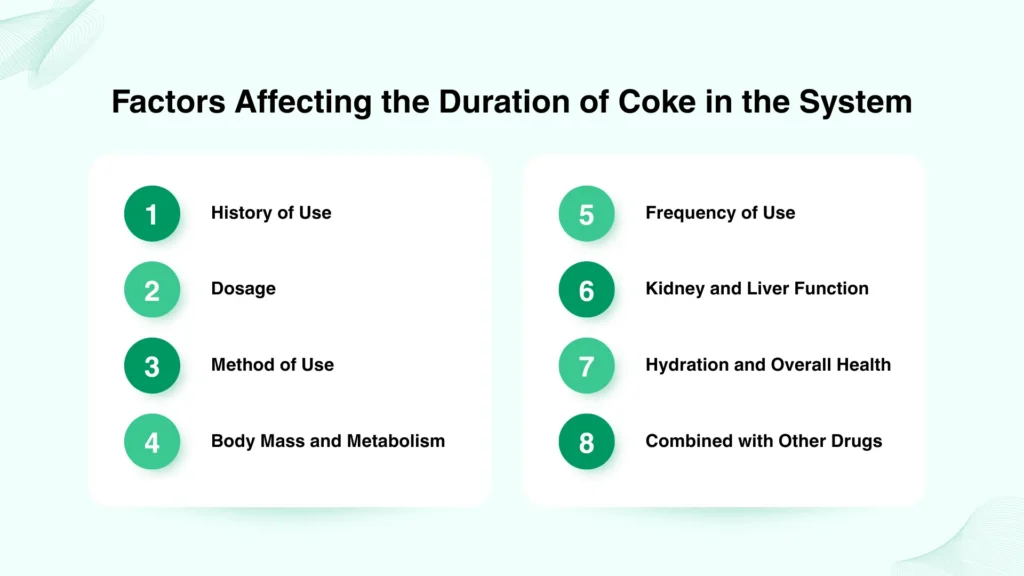
Cocaine is a powerful substance that often leaves the body quickly. Your body may start to adjust to the changes caused by cocaine use quickly. How long does coke stay in your system? The exact stay time of cocaine in the body depends on the following factors.
History of Use
Individuals who consume cocaine occasionally usually eliminate it faster than those who heavily or chronically use it. Long-term cocaine consumption may build up metabolites in the body, extending the detection in hair, urine, and other drug tests.
Dosage
The amount of cocaine used directly affects the stay time in the body. The liver requires significant time to metabolize larger doses. That’s why detection is extended for heavy doses rather than occasional, small cocaine doses.
Method of Use
The method of cocaine consumption influences its entrance into the bloodstream and the intensity of effects. Injecting and smoking ensure a quick absorption, while oral ingestion and snorting offer slower absorption. Moreover, cocaine jaw is an oral health effect caused by severe drug use.
Body Mass and Metabolism
Individuals with quicker metabolism often experience fast cocaine processing. Age, genetics, physical activity, muscle mass, and body weight affect how the body breaks down cocaine for smooth elimination.
Frequency of Use
Frequent cocaine consumption significantly increases the storage of metabolites in the body. That’s why regular cocaine users usually test positive for a longer time than individuals who consume cocaine once or twice.
Kidney and Liver Function
The liver is responsible for metabolizing cocaine into the metabolites such as benzoylecgonine. The kidneys remove these metabolites from the system through urine. Poor kidney or liver function slows the elimination process while prolonging detection time.
Hydration and Overall Health
Overall health and proper hydration support both normal liver and kidney function. However, they cannot speed up the elimination process dramatically. A healthy body is capable of processing cocaine more efficiently.
Combined with Other Substances
Using cocaine with weed or other drugs may affect how your body metabolizes the cocaine. Combining cocaine with alcohol can produce a toxic compound, cocaethylene. It remains in the body for a longer time and increases the risk of overdose.
Does Cocaine Combined with Alcohol Stay Longer in Your Body?
Combining cocaine and alcohol addiction may lead to the production of cocaethylene and extend the timeline instead of breaking down cocaine. There is an extended duration of this toxic substance in the body, with higher risks of liver damage, stroke, heart attack, and seizures. That’s why metabolites may remain for a longer time and extend the cocaine detection time. It boosts euphoric effects, increasing the risks of repeated use and addiction.
What to Expect During a Cocaine Drug Test
Cocaine drug tests are ideal for detecting benzoylecgonine, which is the primary metabolite rather than the drug itself. The cocaine detection test can vary depending on the type of collected sample. Urine testing is common because of its affordability and accuracy for drug detection for several days.
A blood test is an ideal option for legal investigation and emergencies because it offers detection for recent use. Saliva test is non-invasive and quick for detecting the presence of cocaine within the previous 1-2 days. Hair test provides the longest detection window to identify cocaine use for up to 90 days after the last consumption.
Can Different Substances Lead You to Test Positive for Cocaine?
A false-positive cocaine test is not common because modern drug tests can accurately detect cocaine metabolites. However, an initial screening test can occasionally lead to a false positive. That’s why positive results are commonly confirmed through advanced laboratory methods like Liquid Chromatography-Mass Spectrometry (LC-MS) and Gas Chromatography-Mass Spectrometry (GC-MS). You should request a confirmatory laboratory test if you believe that you have received an inaccurate positive test.
Affect from Cocaine Combined with Alcohol or Other Drugs?
Access a personalized, confidential treatment and aftercare support to recover from cocaine addiction smoothly.
Receive the Personalized Cocaine Addiction Treatment at House of Zen
Cocaine can badly affect your life and may stay in your system for a long time. You should receive personalized treatment from the House of Zen LA to address the root causes of addiction. Let’s get in touch with our professional admission team and start your long-term cocaine recovery journey today!
Frequently Asked Questions About How Long Cocaine Stays Answered
Here are answers to common questions about the stay time of cocaine.
How long does cocaine stay in a urine drug test?
Cocaine stays in a urine drug test for approximately 2 to 4 days for individuals who use cocaine occasionally. The cocaine detection window can be extended to 1-2 weeks for chronic or heavy cocaine users.
How long does cocaethylene stay in your system?
Cocaethylene stays in the blood and saliva for approximately 24-48 hours, while detection time extends to 4 days for a urine test. That’s why the stay time of cocaethylene in the system varies depending on the test type.
What is the lab cut-off for cocaine?
The standard lab cut-off for cocaine is approximately 150 ng/mL to 300 ng/mL in urine for the initial screening. However, the cut-off for confirmatory testing is around 100 ng/mL to 150 ng/mL, depending on workplace or federal guidelines.
Does cocaine show up on a 5-panel?
Yes, cocaine often shows up on a 5-panel drug test. This 5-panel test screens for cocaine by detecting the benzoylecgonine that is a metabolite rather than the cocaine itself. The detection window varies for occasional and heavy users.
How sensitive is the cocaine drug test?
The standard cocaine drug test is very sensitive for individuals struggling with addiction. This reliable screening has a standard cut-off threshold of 150 ng/mL to 300 ng/mL to detect the primary metabolite.
Why am I testing positive for cocaine?
You are testing positive for cocaine because of direct exposure to the drug or its metabolite, benzoylecgonine. The initial screening may occasionally lead to a rare false-positive cocaine drug result.
