







Several individuals entering alcohol and drug addiction treatment wonder, “Can you leave rehab whenever you want?” The decision to leave the rehab depends on different factors, such as medical or legal restrictions, the type of rehab program, and whether you are attending treatment voluntarily.
Adults who enter rehab voluntarily have the right to leave the treatment. However, leaving the rehab before completion of treatment may lead to serious consequences such as overdose, risk of relapse, and withdrawal complications. In some conditions, such as court-ordered medical detox, psychiatric care, and rehabilitation, individuals cannot leave rehab due to safety or legal requirements.
✨ Highlights:
- Leaving rehab early often contains serious consequences for individuals.
- Rehab centers can restrict individuals from leaving in case of psychiatric hold.
- Leaving court-ordered rehab may result in financial and legal actions.
- Checking yourself out of rehab can lead to overdose and increased risk of relapse.
Can You Leave Addiction Rehab?
You can and can’t leave the drug and alcohol rehab, depending on the medical and legal consequences. It is important to consult with the rehab specialists before leaving to understand the risk of early discharge, the potential impact on recovery, and signing papers to leave Against Medical Advice (AMA) rehab.
Individuals who participated in the court-ordered addiction treatment program may face legal actions upon leaving the rehab center without approval. The professional team also encourages the individuals to remain in detox until the withdrawal symptoms are properly managed. You can also talk with the professional team of House of Zen LA to adjust the treatment plan if you are struggling with finances, family responsibilities, or intense cravings.
💡 Did You Know
Approximately 1% to 2% of medical admissions often result in the Against Medical Advice (AMA) discharge.
How Does the Type of Rehab Affect Your Ability to Leave?
The ability to leave the rehab largely depends on the treatment program you are in. There are several voluntary addiction treatment programs, and others involve medical or legal considerations. The type of addiction rehab affects how and when you can leave the treatment for drug and alcohol addiction.
Medical Detox Program
Medically supervised detoxification helps individuals manage the withdrawal symptoms. Patients in a voluntary detox program have the right to leave the rehab, but it can lead to serious consequences. Withdrawal from substances such as benzodiazepines or alcohol may cause severe complications, requiring immediate rehabilitation.
Inpatient Program (IP)
Inpatient or residential treatment offers 24/7 medical supervision to individuals struggling with severe addiction. Adults who are entering voluntary rehab can request discharge. The professional staff explains the risks of early termination of treatment and discusses the alternative treatment options.
Intensive Outpatient Program (IOP)
An Intensive Outpatient Program (IOP) provides immense flexibility to live at home and attend the scheduled treatment sessions. You can leave the intensive outpatient treatment whenever you want to stop receiving rehab. However, you may experience relapse if you leave rehab without medical advice.
Court-Ordered Rehab
A court-ordered rehabilitation service is different from voluntary addiction treatment. Individuals need to comply with the regulations and conditions of the court. Leaving the rehab against the court orders may result in different consequences, such as probation violations and legal penalties.
Rehab for Minors
When a minor enters rehab, legal guardians or parents may often be involved in the addiction treatment decisions. Minors may not be able to leave the rehab on their own, depending on the circumstances of admission and local laws. The authorization from the rehab center or guardian approval is required for leaving the addiction treatment.
Leaving Treatment Early Before Completion of Rehab Contains Serious Risks
To overcome addiction and the serious risk of relapse, completing treatment at House of Zen is the best strategy. Schedule an appointment now!
When Can the House of Zen Restrict You From Leaving?
Adults in the voluntary rehab have the right to leave the treatment, but a rehab center can temporarily prevent someone from leaving under specific conditions. These are intended restrictions to protect individuals while ensuring medical safety and complying with laws. The rehab center can delay the discharge in the case of a medical emergency, such as seizures or dehydration.
When a person experiences a mental health crisis, a rehab center can consider a psychiatric hold under state laws. That’s why individuals need permission from a mental health professional for safe discharge. Individuals involved in rehab due to a diversion program, probation requirement, or court order cannot leave the rehab on their own. Moreover, state laws also govern the rehab centers for mental health and addiction treatment. Our rehab center in Los Angeles follows these regulations for rehabilitation services.
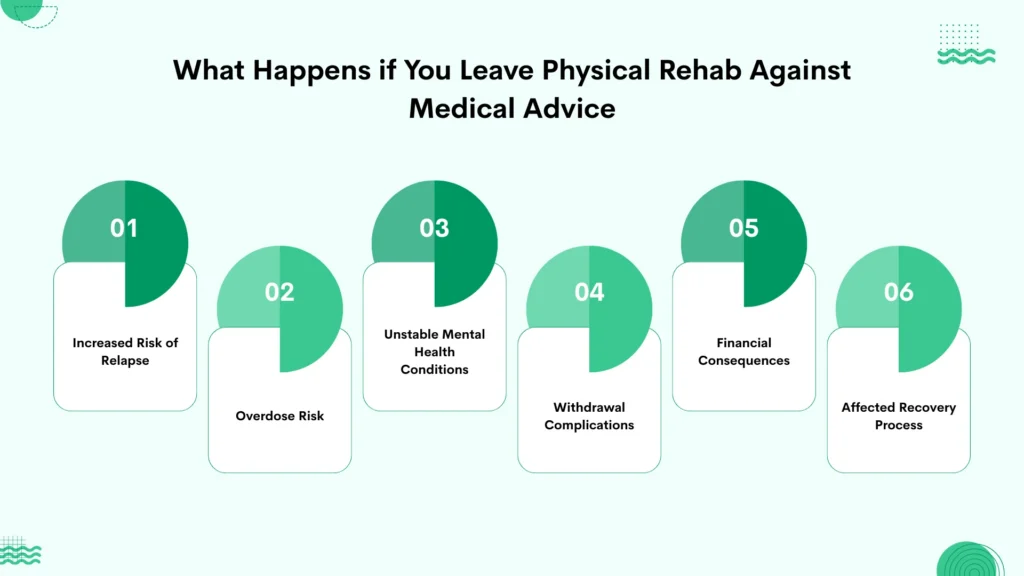
What Happens if You Leave Physical Rehab Against Medical Advice
Leaving the rehab before completing the treatment plan may affect immediate and long-term recovery. Every individual’s situation can be different when leaving addiction treatment. However, ending treatment early usually means missing required support, coping skills, and therapies for relapse prevention.
Increased Risk of Relapse
One of the biggest concerns in rehab for alcohol and drug addiction is the potential risk of relapse. The certified professionals at the rehab center help individuals identify triggers and build healthy coping skills to support long-term recovery. Leaving rehab before learning these skills may make it difficult for individuals to maintain sobriety.
Overdose Risk
Spending sufficient time in the rehab for smooth recovery, your body experiences a gradual decrease in tolerance to alcohol or drug consumption. Returning to use the same amount of substance you were using before treatment may raise the risk of overdose. The overdose risk is higher in the case of opioids and powerful substances.
Unstable Mental Health Conditions
Mental health disorders usually influence or worsen addiction. Individuals struggling with both mental health and substance use disorder (SUD) may need dual diagnosis treatment and more time to overcome addiction and co-occurring disorders. That’s why leaving rehab before treatment completion affects both lifestyle and overall health.
Withdrawal Complications
Managing the withdrawal symptoms of drug or alcohol use disorder (AUD) is necessary to achieve and maintain recovery through a personalized treatment plan. Leaving the drug or alcohol addiction treatment midway may worsen the withdrawal symptoms. Moreover, it also becomes difficult for individuals to become sober due to withdrawal syndrome.
Financial Consequences
Whether you are using funds out of your pocket or using insurance, you are investing in achieving long-term sobriety. However, leaving the rehab before gaining complete recovery can cause financial consequences to individuals. That’s why individuals should complete the treatment for sustainable recovery and avoid financial problems.
Affected Recovery Process
An incomplete treatment plan can badly affect the individual’s recovery journey. The affected recovery process makes it difficult for individuals to gain and maintain long-lasting sobriety. The certified professionals assist individuals during their personalized recovery to keep them motivated for the long-term recovery experience.
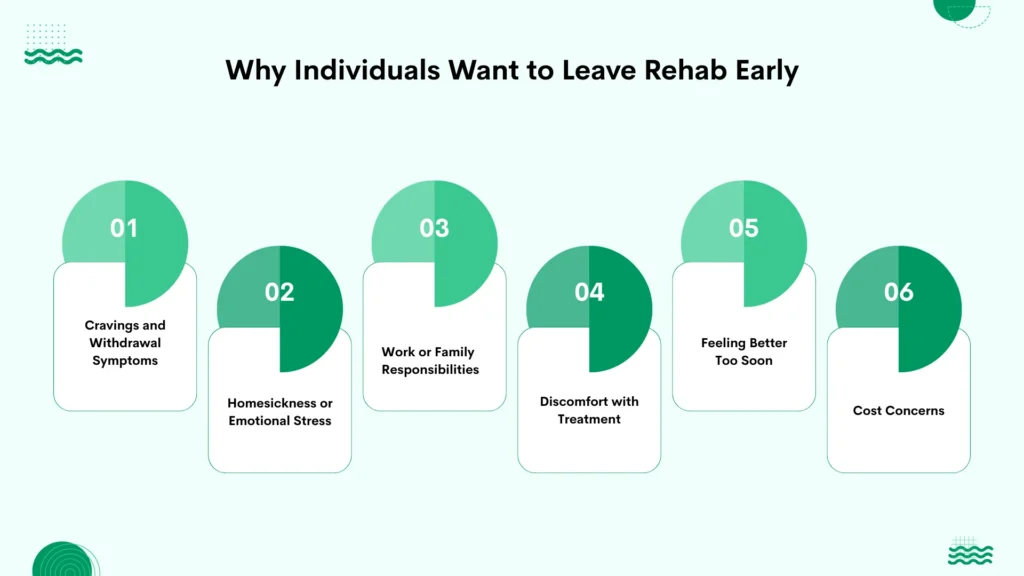
Why Individuals Want to Leave Rehab Early
Leaving rehab often depends on an impulsive choice. Several individuals experience personal obligations, emotional challenges, and physical discomfort, making the treatment journey difficult. Understanding the concerns may help you find practical solutions to support long-lasting recovery.
Cravings and Withdrawal Symptoms
The early phase of recovery may feel emotionally and physically challenging. Discomfort, withdrawal symptoms, and intense cravings may urge individuals to discontinue the treatment. Proper therapeutic support and medical care help individuals in effectively managing the addiction withdrawal symptoms.
Homesickness or Emotional Stress
Being away from the familiar surroundings, friends, and family members may make the recovery emotionally challenging for individuals. Feelings of homesickness, anxiety, or loneliness may become common during the inpatient treatment. Regular communication, peer support, and counseling may help individuals manage their emotions.
Work or Family Responsibilities
Several people worry about their financial obligations, employment, ageing parents, or children during their stay in rehab. These responsibilities may put additional pressure to leave rehab early, even knowing that treatment is beneficial for lasting sobriety. Speaking with the certified specialists helps in identifying and addressing concerns.
Discomfort with Treatment
A personalized therapy may require individuals to discuss challenging emotions, trauma, or painful memories. This process can be uncomfortable, but it is necessary for lasting healing. Sharing concerns with the treatment team may result in adjusting the treatment approach for the continuous recovery process.
Feeling Better Too Soon
Individuals in rehab feel better after some time because they receive personalized detox and treatment to manage withdrawal symptoms and overcome the substance use disorder. However, addiction recovery is beyond just detoxification and managing withdrawal symptoms. Ongoing therapy addresses behavioral and psychological factors of addiction.
Cost Concerns
The cost of rehabilitation services may also force individuals to leave the treatment before achieving a comprehensive recovery. It is important to discuss payment plans, financial assistance, insurance verification, and lower levels of care. We help individuals with affordable treatment options to continue their recovery journey.
What You Should Do Before Leaving Rehab
It is essential to assess your reasons before making a final decision to leave the rehab. You can get personalized and confidential help from a professional treatment to address several concerns. This approach allows you to continue your recovery in a way beyond your expectations. You can talk with the professional team to discuss problems and solutions for leaving the rehab.
It is better to discuss changes in the treatment plan if you are not feeling better with the current therapeutic approach rather than leaving the rehab. You can explore the step-down treatment programs and aftercare support for lasting recovery. You can also consult with the treatment team to design a discharge plan if leaving rehab is the ideal decision for your condition.
How Completing Alcohol and Drug Rehab Improves Lasting Recovery
Completing a rehab program may give you an ideal opportunity to build a solid foundation for long-term recovery. Treatment may feel difficult at times, but staying in a rehab center allows you to develop support, confidence, and skills required to maintain lasting recovery after leaving the treatment facility.
We help you strengthen the relapse prevention skills by managing cravings and recognizing the potential triggers. Our certified team also assists you in building healthy coping strategies through individual and group therapy sessions. The personalized aftercare program helps individuals maintain the recovery process even after completing the treatment.
Ready to Complete Your Rehab for Lasting Sobriety?
Contact House of Zen to start your treatment immediately for long-term recovery with personalized aftercare support.
Why Choose House of Zen for Addiction Rehabilitation Program
Choosing House of Zen LA makes a significant difference in the recovery journey while reducing the likelihood of leaving the treatment early. We offer confidential, personalized care to individuals struggling with addiction and mental health conditions. We offer different levels of care, meeting individuals’ needs and ensuring a smooth transition throughout the recovery.
The admission team at the leading rehab center in Los Angeles also assists individuals in verifying their insurance plans to reduce financial stress. We offer ongoing and aftercare support to ensure relapse prevention and strengthen sobriety. Our professional team encourages open communication to prevent you from leaving AMA rehabilitation.
Start Your Drug and Alcohol Rehab at House of Zen
So, can you leave rehab whenever you want? Leaving rehab is not the healthiest or safest decision, even if you have the right to leave the voluntary treatment. Early leaving may cause an overdose or increased risk of relapse. Let’s start and complete the smooth addiction treatment at House of Zen for long-term sobriety.
Answers to Common Questions About Leaving Rehab Whenever You Want
Frequently asked questions about leaving treatment are answered.
Can you leave inpatient rehab whenever you want?
Yes, you can leave inpatient rehab whenever you want if you are in voluntary rehabilitation. However, you cannot leave rehab without approval in the case of a psychiatric hold or court-ordered treatment.
Can you check yourself out of rehab?
Yes, you are free to check yourself out of rehab in the case of voluntary treatment for alcohol and drug addiction. However, it is recommended to complete the rehab to gain sobriety and reduce the risk of relapse.
Will insurance pay if you leave rehab early?
Whether insurance pays if you leave rehab early depends on the varying policies of insurance providers. That means most insurance companies may cover the cost of attending treatment sessions even if you leave rehab early.
Why do people leave rehab early?
People usually leave rehab early due to cravings and withdrawal symptoms, emotional stress or homesickness, family or work responsibilities, discomfort with treatment, feeling better too soon, and cost concerns.
Can you go back to rehab after leaving?
Yes, you can go back to rehab after leaving because we encourage individuals for readmission to continue their recovery journey. Returning to rehab may help you strengthen your long-lasting sobriety.
What are the legal rights for leaving rehab against medical advice?
When you are attending court-ordered rehab, leaving the treatment facility against medical advice may result in a violation of court orders. You can face serious consequences like jail time, penalties, or fines.
