







Seeking professional help for addiction is a significant step, but several individuals face the barrier of treatment cost. Paying for alcohol or drug addiction rehab may seem overwhelming. Does insurance cover rehab for alcohol and drug addiction? Yes, most major insurance plans offer coverage, reduce the out-of-pocket cost, and make treatment affordable.
The insurance coverage for substance use disorder may vary based on the provider, plan, and treatment necessity. Understanding how insurance covers rehab may help you access structured care without worrying about treatment costs. Call +1 (844) 717-7069 for insurance-covered drug and alcohol rehab!
✨ Highlights:
- Insurance covers rehab for alcohol and drug addiction.
- Private, government, and Medi-Cal provide treatment coverage.
- HMO, PPO, EPO, and POS are some of the available insurance plans.
- Aetna, Cigna, UnitedHealthcare, and Kaiser Permanente offer rehab coverage.
- Insurance covers detox, IP, PHP, IOP, OP, dual diagnosis care, and MAT.
- Network status, copay, deductible, coinsurance, premium, out-of-pocket maximum, medical necessity, and rehab duration affect coverage.
What is Insurance Coverage for Addiction Treatment?
Insurance pays for rehab, making the treatment affordable for individuals. According to the Affordable Care Act (ACA), insurance plans need to cover substance abuse and mental health disorders. Addiction is recognized as a medical condition and is covered by health insurance benefits.
Substance use treatment is usually covered as a behavioral health benefit. The insurance coverage for substance abuse may include services like a detox program, inpatient treatment, outpatient rehab, and ongoing care. Medical necessity or preauthorization may be required before approving the treatment coverage.
What are the Different Types of Insurance for Rehab Coverage?
There are different types of insurance providers that cover drug and alcohol addiction rehab services. The insurance benefits may vary depending on the provider and plan. Some insurance plans offer extensive access to inpatient and outpatient programs, while others provide limited coverage to specific levels of care.
Private Health Insurance Offers Coverage for Addiction Rehab
Private health insurance is an individualized plan. These insurance plans may include coverage for detoxification, residential treatment, outpatient rehab, and therapy sessions. The private insurance coverage usually depends on the network and policy.
Aetna, Cigna, Blue Cross Blue Shield (BCBS), and UnitedHealthcare are popular private insurance providers. The coverage may require medical necessity and preauthorization based on whether the rehab facility is in-network.
Government Health Insurance Covers Rehab
Government-funded insurance programs may offer rehab coverage to individuals struggling with substance use disorder. These insurance programs facilitate individuals while improving access to behavioral and medical health services.
The most common government-funded insurance plans include Medicare and Medicaid. These plans provide coverage for medically necessary substance addiction treatment. However, the approved services may vary from one plan to another.
💡 Did You Know
37.% of individuals with drug use disorder may not be aware of their insurance coverage for drug use treatment.
Does Medi-Cal Cover Rehab?
Medi-Cal is a specific California Medicaid program that may cover addiction treatment for eligible individuals. This insurance plan offers coverage for detoxification, inpatient treatment, outpatient rehab, and mental health treatment. Medi-Cal coverage for rehab may depend on the individual’s eligibility and approved insurance providers. Individuals can verify with rehab centers about Medi-Cal acceptance for treatment.
Employer-Sponsored Plans
Employer-sponsored health insurance plans are offered in the workplace and usually include behavioral health benefits. Several individuals use these plans to access rehab through in-network providers.
The coverage may include the detox program, inpatient and outpatient treatment, and therapy sessions. The out-of-pocket cost for rehab depends on the copays, deductibles, and coinsurance needs.
Looking for an insurance-covered rehab program?
Don’t hesitate to contact us and verify your insurance for alcohol and drug rehab.
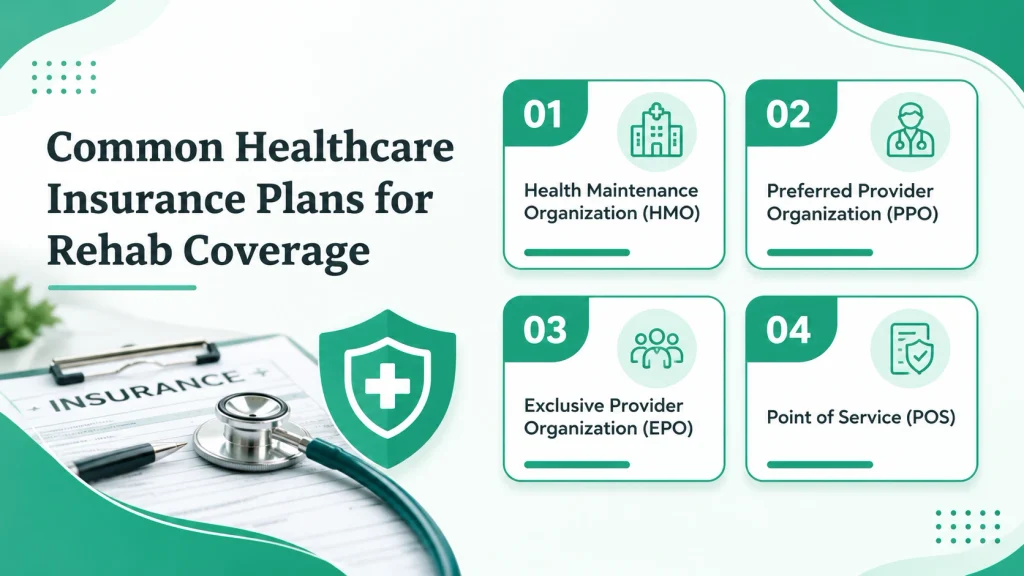
What are the Common Healthcare Insurance Plans for Rehab Coverage?
The rehab coverage for substance abuse may rely on the insurance provider and plan. Different plans determine the referral requirements, approved treatment centers, and out-of-pocket payment. HMO, PPO, EPO, and POS are different plans available for individuals looking for a smooth addiction rehab experience.
Health Maintenance Organization (HMO)
An HMO insurance plan may require individuals to consider the rehab centers within the specific network. A referral from the primary care physician may be required to access the treatment center. There are low monthly premium plans with limited provider options, allowing individuals to access affordable addiction treatment options. Choosing an in-network plan allows individuals to access the full benefits. A health maintenance organization does not put an additional financial burden but limits the substance abuse rehab options.
Preferred Provider Organization (PPO)
A PPO insurance plan provides more flexibility to choose the rehab center without any referrals. Individuals can access both out-of-network and in-network treatment centers without any limitations. There is flexibility because more options are available for individuals looking to recover from alcohol or drug addiction. However, there are higher out-of-pocket or premium costs when you choose a preferred provider organization plan to get treated for substance use disorder.
Exclusive Provider Organization (EPO)
An EPO insurance plan may combine the features of PPO and HMO insurance plans. There is no need for a referral for addiction treatment, but individuals need to stay in the provider network for treatment coverage. An exclusive provider organization plan is an ideal option for rehab coverage if a treatment center is within the approved network. That means you cannot consider an out-of-network option for addiction treatment.
Point of Service (POS)
A POS plan allows individuals to choose out-of-network or in-network care based on their specific needs. However, individuals may need referrals to access the specialized rehab service. It is true that the cost of in-network services is usually lower than the cost of out-of-network services. However, it is important to verify the insurance benefits before proceeding with admission at the rehab center.
Looking for the most suitable insurance plan for substance abuse treatment?
Get in touch with our professional team for insurance-covered rehab.
Does Insurance Cover Rehab for Alcohol?
Alcohol rehab is usually covered by insurance providers, reducing the financial stress. The coverage may depend on the insurance provider, recommended level of care, and policy benefits. Insurance providers usually offer coverage for alcohol detox programs, inpatient rehab, outpatient care, and counseling. For insurance coverage, providers may require a medical necessity to approve treatment.
Does Insurance Cover Rehab for Drug Addiction?
Insurance may cover drug addiction treatment. The coverage may include detoxification, residential treatment, outpatient programs, medication-assisted treatment, and therapy.
The amount of treatment coverage may vary depending on the in-network treatment center, duration of the program, and type of drug treatment. The smooth insurance verification process allows individuals to understand the coverage benefits for rehab.
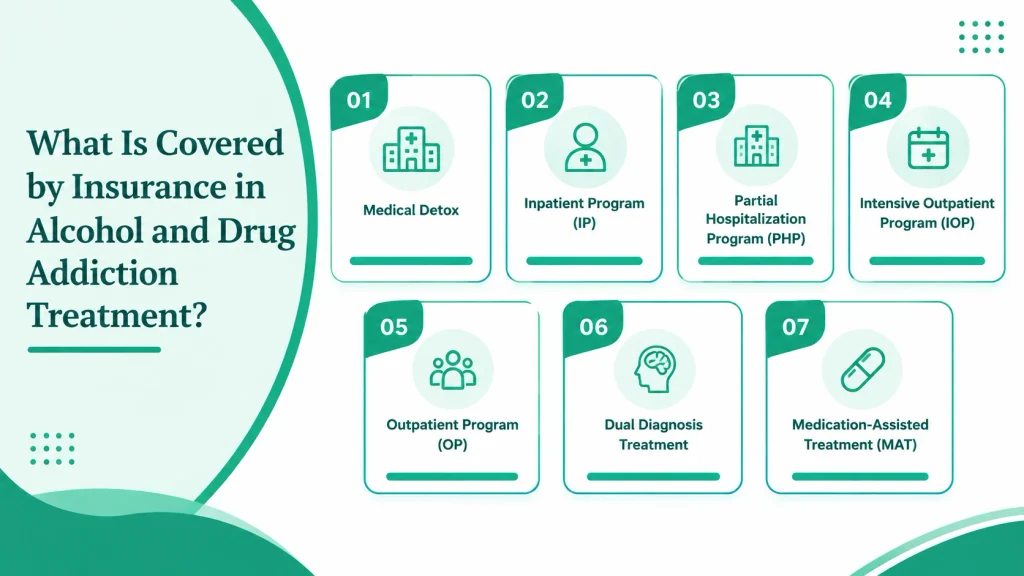
What is Covered by Insurance in Alcohol and Drug Addiction Treatment?
Several insurance plans provide coverage for different treatment services. The coverage may vary based on the diagnosis, treatment, and benefits. There are different levels of care covered in the insurance plan.
Medical Detox
There is insurance coverage for medical detox when individuals need to withdraw from alcohol and drug addiction safely. The medically supervised detoxification process allows individuals to manage the withdrawal symptoms under medical supervision and avoid the risks of withdrawal. The wide availability of insurance for medical detoxification makes it easy for individuals to take the initial step and remove the toxins of the substance from their bodies for a safe recovery journey.
Inpatient Program (IP)
Insurance commonly covers inpatient treatment for individuals struggling with alcohol or drug addiction. This treatment is ideal for individuals who need intensive, 24/7 care while staying within the rehab center. The qualified staff provides a structured recovery environment and treatment monitoring. You may need to submit the medical necessity as evidence for smooth approval of residential treatment coverage. You can access insurance-covered inpatient treatment at House of Zen.
Partial Hospitalization Program (PHP)
A partial hospitalization program is commonly covered by insurance, making it an affordable option. This program allows individuals to return home in the evening after receiving treatment at the rehab center. It is an ideal option for individuals who require intensive care without an overnight stay. Coordinating with the provider is important to understand insurance coverage when you are transitioning from inpatient treatment to a partial hospitalization program to continue your recovery journey.
Intensive Outpatient Program (IOP)
The insurance coverage and out-of-pocket costs for the intensive outpatient program depend on the insurance plan and the duration of the program. It includes scheduled treatment sessions every week while allowing individuals to maintain their responsibilities. You need to convey to your insurer that IOP is medically necessary for substance use disorder treatment. Moreover, you can choose an in-network program to lower out-of-pocket costs for the intensive outpatient treatment.
Outpatient Program (OP)
The insurance coverage for the standard outpatient program may involve recovery support and scheduled therapy sessions. This treatment is an ideal option for individuals who are struggling with milder symptoms. Outpatient treatment is recommended for individuals who are stepping down from a higher level of care. There are in-network and out-of-network insurance options for individuals seeking the standard outpatient treatment to address their substance use disorders affordably and effectively.
Dual Diagnosis Treatment
The insurance providers usually cover dual diagnosis treatment for individuals struggling with substance abuse and mental health conditions simultaneously. The coverage ensures that individuals receive integrated care to address the co-occurring disorders at the same time. You can access covered integrated care in different levels of care, including Inpatient Program (IP), Partial Hospitalization Program (PHP), and Intensive Outpatient Program (IOP). Medical detox for dual diagnosis treatment is also covered by insurance providers.
Medication-Assisted Treatment (MAT)
Insurance coverage is available for medication-assisted treatment by combining therapy and medications for specific substance use disorders. The actual coverage for MAT may include clinical therapy sessions and approved medications for rehabilitation. Most insurance providers offer coverage for MAT used to address alcohol and opioid addiction according to federal laws. Prior authorization is often required for medication-assisted treatment. Both private and government plans cover MAT.
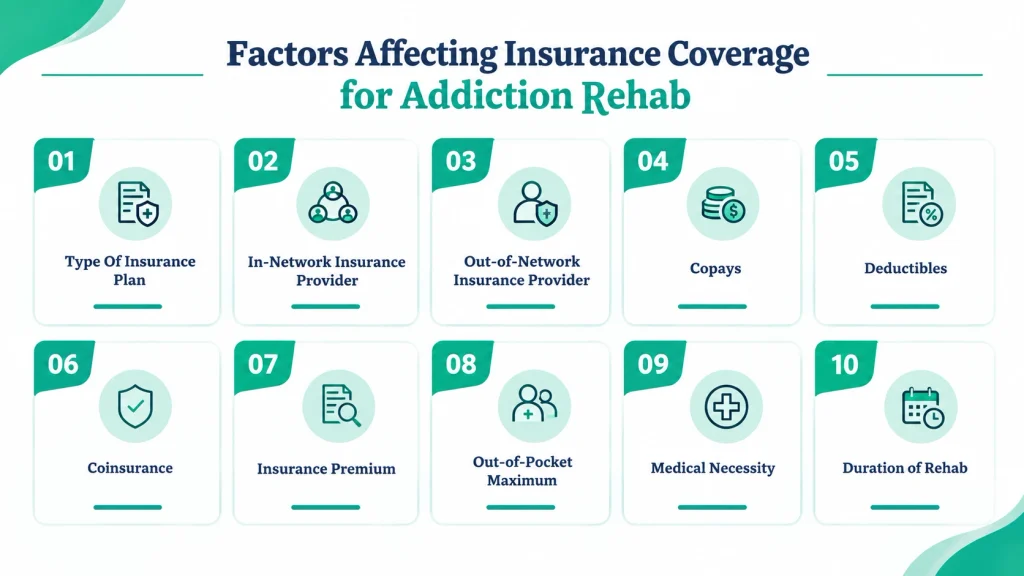
What are the Factors Affecting Insurance Coverage for Addiction Rehab?
Insurance may differ depending on the clinical and policy factors. It is important to understand the factors that influence insurance coverage for alcohol and drug addiction treatment. Let’s understand the important factors and choose the right treatment program.
Type of Insurance Plan
The coverage depends on employer-sponsored, state-funded, private, and Medicaid plans. The insurance approval and benefits vary from one plan to another. Therefore, it is important to understand the coverage before entering rehab. The government-based programs are much more affordable, but you need to wait for a longer time to enroll in treatment. There are different private insurance plans that provide quick access to addiction treatment, allowing individuals to get sober.
In-Network Insurance Provider
In-network rehab may provide a smoother claims process while offering a lower treatment cost. An in-network insurance provider has a contract with the rehab facility to provide the rehabilitation services at a pre-agreed or discounted rate. In-network treatment coverage offers a streamlined approval process while reducing the out-of-pocket cost for substance use disorder treatment. That’s why in-network insurance is beneficial for individuals who are looking for affordable treatment.
Out-of-Network Insurance Provider
An out-of-network insurance provider usually does not have a formal contract with rehab facilities for alcohol and drug addiction treatment. Individuals can enjoy greater flexibility with access to specialized addiction care. That’s why individuals can also become capable of maintaining their privacy during addiction treatment. There are high out-of-pocket costs with lower insurance coverage and higher deductibles.
Copays
A copay is a fixed amount that individuals need to pay out-of-pocket for substance use disorder treatment. An addiction copay amount cannot be higher than other medical services according to parity rules. The copay amount may apply to inpatient treatment, outpatient therapy, and medication management for addiction treatment. Copay is lower for in-network vs. out-of-network coverage.
Deductibles
A deductible is the annual amount individuals need to pay before an insurance provider starts to cover addiction treatment. You may have to pay 100% of eligible costs until the deductible limit is reached. The insurance provider starts paying for addiction treatment after meeting the deductible criteria. Moreover, deductibles are fixed out-of-pocket costs that often reset after the start of every plan year or calendar year.
Coinsurance
Coinsurance is the amount of treatment costs you pay for addiction rehab services after meeting your annual deductible. The amount of coinsurance is divided between the individual and the insurance provider, usually through an 80/20 rule where the insurance provider pays 80% of treatment, and the individual needs to pay only 20% of the cost for addiction rehabilitation services.
Insurance Premium
A premium is a monthly payment that individuals have to make to keep their insurance active for substance abuse treatment. The coverage may lapse, and the insurance provider does not facilitate claims if you stop paying your insurance premiums. That’s why every individual needs to make the premium payment to keep using the insurance plan for alcohol and drug addiction treatment.
Out-of-Pocket Maximum
The out-of-pocket maximum you need to pay in a year through in-network addiction treatment. The insurance provider often pays 100% of the addiction treatment costs for the rest of the year when you reach the out-of-pocket maximum. Copays, deductibles, and coinsurance are often counted towards the out-of-pocket maximum. However, monthly premiums are usually not counted towards the out-of-pocket maximum.
Medical Necessity
Insurance providers may need a clinical evaluation to confirm the medical necessity for the rehab program. The approval for the insurance coverage may depend on the severity of the substance use disorder and the recommended level of care. You may need to obtain medical necessity documentation and present it to the insurance provider for drug and alcohol addiction treatment.
Duration of Rehab
The timeline of the rehab program for alcohol and drug addiction also affects the insurance coverage. The insurance plan may cover treatment for an initial number of days or a specific number of days. The coverage for a continuous stay may require further assessment and insurance approval. Therefore, individuals should coordinate with the rehab facility and insurance provider for streamlined coverage.
Common Insurance Providers for Alcohol and Drug Rehab Coverage
Several major insurance providers offer behavioral health benefits to cover alcohol and drug rehab programs. Both public and private health insurance plans provide coverage that may vary depending on the insurance network, medical necessity, and policy. That’s why it is important to understand how different insurance plans cover addiction treatment.
Does Aetna Cover Rehab?
An Aetna insurance plan may cover different levels of care for substance abuse treatment. It may offer coverage for medical detox, IP, PHP, IOP, OP, and therapy sessions. The coverage depends on preauthorization and in-network providers. In-network coverage lowers the overall treatment cost, allowing individuals to get sober without any financial burden. Formal approval through medical necessity makes it easy for individuals to start residential treatment to overcome substance use disorder. Copays and deductibles for Aetna-covered treatment can vary depending on the individual or employer plan.
Does Blue Cross Blue Shield Cover Rehab?
Blue Cross Blue Shield insurance plans usually provide substance use treatment benefits. The benefits include inpatient and outpatient treatment for alcohol and drug addiction. The approved BCBS coverage may vary depending on the BCBS member plan. Blue Cross Blue Shield (BCBS) provides coverage for dual diagnosis treatment and Medication-Assisted Treatment (MAT). It’s necessary to understand federal parity law, prior authorization, network status, and state variation for a smooth insurance-covered treatment experience. You can coordinate with the insurance company to understand the coverage.
Does Cigna Cover Rehab?
A Cigna insurance plan may cover drug and alcohol rehab services. The covered services in Cigna may include inpatient treatment, outpatient rehab, detoxification, medication-assisted treatment, and dual diagnosis treatment. You can access smooth Cigna coverage when substance use disorder treatment is medically necessary for individuals. Cigna plan tiers, pre-authorization, and network status are factors that influence the overall Cigna insurance coverage for substance abuse rehab programs. You can get help from our representative to verify your Cigna insurance for addiction treatment.
Does UnitedHealthcare Cover Rehab?
The UnitedHealthcare insurance company offers addiction treatment coverage for detox programs, medication-assisted treatment, therapy sessions, inpatient rehab, and outpatient treatment. UnitedHealthcare insurance verification is required for copays and provider eligibility. Substance use disorder treatment coverage is usually subject to medical necessity and the specific insurance plan. Prior authorization and parity laws often affect the overall UnitedHealthcare coverage for addiction treatment. An in-network provider in the insurance plan reduces out-of-pocket costs.
Does Kaiser Permanente Cover Rehab?
Kaiser Permanente provides streamlined insurance coverage for alcohol and drug addiction treatment. This insurance company usually covers a medically supervised detox program, residential rehab, outpatient treatment services, counseling and therapy, and medication-assisted treatment. Kaiser Permanente is often acceptable for rehab facilities through the out-of-network benefits. The professional team at House of Zen LA helps you understand how much Kaiser Permanente covers for confidential, structured treatment.
Does Horizon Insurance Cover Rehab?
Horizon Insurance provides alcohol and drug addiction treatment coverage as a necessary health benefit under state and federal laws. It covers medically supervised detoxification, inpatient treatment, PHP, IOP, outpatient care and counseling, dual diagnosis care, and medication-assisted treatment. Understanding network status and plan specifics is essential to access affordable addiction and substance use disorder treatment through Horizon coverage. The prior authorization from Horizon is often required for residential or intensive services before starting substance abuse rehabilitation.
Does Surest Insurance Cover Rehab?
Surest often covers substance use disorder and addiction treatment through a distinctive, upfront fixed copay model using Optum Behavioral Health and UnitedHealthcare networks. There is no traditional coinsurance and deductibles in Surest plans. Members often pay predictable, flat copays per visit. Surest insurance provides coverage for inpatient, PHP, IOP, OP, and medication-assisted treatment. Surest offers substance use benefits under the medical or surgical benefits. You can easily confirm both the network status and prior authorization before verifying insurance for treatment coverage.
Does UMR Insurance Cover Rehab?
UMR-administered health insurance covers both alcohol and drug addiction treatments. It’s a Third-Party Administrator (TPA) that usually partners with UnitedHealthcare for employer-sponsored health plans. The coverage includes medical detox, residential rehab, partial hospitalization treatment, intensive outpatient program, and medication-assisted treatment. In-network status, prior authorization, and deductibles are factors influencing the insurance coverage for substance use disorder treatment. You can verify UMR insurance and start your addiction treatment smoothly.
Does Medicaid Cover Rehab?
Medicaid covers addiction and substance use disorder treatment. The specific rules and insurance benefits vary from one state to another. It often covers medical detox, inpatient rehab, outpatient services, counseling and screening, and medication-assisted treatment for individuals. There are lower or no out-of-pocket costs when you are proceeding with treatment through Medicaid coverage. Prior authorization, copays, and coverage limits depend on your state. State-funded rehab centers often accept Medicaid for treatment coverage, but not all facilities accept it.
Does Medicare Cover Rehab?
Medicare covers psychological and medical treatment for alcohol and drug addiction. It includes Part A, Part B, Part C, and Part D for insurance-covered substance use disorder rehabilitation for individuals. Standard medicare coverage is not available for sober living houses and traditional non-hospital residential rehab facilities. A medical necessity certificate from a Medicare-approved provider or facility is required to access the covered treatment. Individuals with Medicare coverage can access substance abuse treatment across inpatient and outpatient treatment programs.
How Much Does Rehab Cost With Insurance?
The cost of rehab with insurance is lower than entering rehabilitation without insurance. The exact cost of insurance-covered treatment depends on the insurance provider’s policy, specific plan, network status, and treatment facility. You may need to understand the insurance benefits and out-of-pocket costs to understand the cost of a substance use disorder treatment with coverage. Individuals who are struggling with addiction and financial problems can consider affordable, insurance-covered treatment.
How Much Does Rehab Cost Without Insurance?
The approximate cost of a medically supervised detox program may range from $250 to $800 per day. Inpatient treatment for alcohol and drug addiction may cost $6,000 to $80,000 depending on facility and available amenities. The intensive outpatient program for substance use disorder treatment may cost individuals around $3,000 to $10,000.
What are Treatment Coverage Options Beyond Insurance?
Insurance providers offer coverage for rehab based on the plan and policy. However, you don’t need to worry if you don’t have an insurance plan. At HoZ LA, we also offer different payment options for alcohol and drug rehab.
- Payment Plan: The rehab centers also offer the monthly installment option for rehab services. Therefore, paying for treatment may become more manageable for individuals.
- Sliding Scale: The specific rehab facilities also adjust the treatment cost based on financial condition. That’s why rehab becomes more accessible for people.
- Self-Pay Option: It is an ideal option to pay for the treatment directly without insurance. House of Zen can accept private payment if you don’t have an insurance plan.
Do I Have to Pay Out of Pocket If Insurance Runs Out Mid-Treatment?
Yes, you often have to pay out of pocket if insurance runs out mid-treatment. The insurance provider usually stops paying when your benefits limit is exceeded or your policy ends. After that, you will be responsible for payment for ongoing care. You can transition to Medicaid after insurance runs out if you meet criteria for asset limits and low income. You can request an extension if you are still experiencing severe addiction. Moreover, you can consider the available payment plans to continue your treatment for long-term recovery.
What is a Verification of Benefits (VOB), and Why Does It Matter Before You Commit?
A Verification of Benefits (VOB) is a process of contacting the insurance provider before addiction care is delivered to confirm an individual’s coverage, covered treatments, and potential out-of-pocket costs. VOB is often used to check whether an insurance policy is active for addiction treatment or not. It also helps you understand the copays, deductibles, and coinsurance for alcohol and drug addiction treatment. You should also consider policy rules that include pre-authorization, limits, and exclusions. The network status confirmation is also important because in-network providers provide affordable treatment to individuals.
Verification of insurance benefits matters to prevent surprise bills and unexpected out-of-pocket medical debts. It helps stop claim denials and prevent lost revenue. Verification also speeds up cash flow, allowing individuals to receive timely treatment for substance use disorder with financial challenges. The smooth and quick insurance benefits verification also reduces admission delays, making it easy for individuals to access specialized addiction treatment.
Why is Insurance Denied for Addiction Treatment?
There are different reasons for insurance denial. However, it is important to understand the most common causes individuals face insurance denial for alcohol and drug addiction treatment. Understanding the primary reason helps you prepare your appeal to address denial and access insurance benefits again for substance abuse rehabilitation.
Lack of Medical Necessity
Most insurance companies offer streamlined coverage when addiction treatment becomes medically necessary for individuals. You may require medical necessity documentation, including medical history, past treatment, and current condition, from the rehab center that you need for addiction treatment. Failure to show medical necessity to insurance providers may lead to denial issues.
Lack of Prior Authorization
There are different insurance plans that ask you to get approval, called pre-authorization, before they start covering alcohol and drug addiction treatment for individuals. It is necessary to coordinate with both the rehab center and the insurance company to ensure the approval of prior authorization. Failure to receive the pre-authorization may result in the insurance denial for addiction treatment.
Insufficient Coverage
Health insurance plans provide different levels of coverage to individuals struggling with drug and alcohol addiction. Some insurance options may consist of standard outpatient rehab services for substance use disorder treatment. However, other insurance plans may offer inpatient addiction treatment to individuals. That’s why an insurance provider may deny coverage for a service that is covered.
How to Appeal an Insurance Denial for Addiction Treatment
You can appeal an insurance denial for substance abuse treatment through a peer-to-peer clinical review, use medical necessity documentation to file a formal internal appeal, or escalate to an external independent review. Here are step-by-step guidelines to appeal an insurance denial for addiction rehabilitation.
Understand and Document the Denial
It is important to understand and document the denial letter that includes critical information. The careful analysis helps you identify the particular reason for insurance denial and the deadline for submitting an appeal. It is a good approach to take careful and quick action, even though most insurance companies offer a timeline of 180 days for internal appeal. It’s important to understand the insurer’s criteria that are used for evaluation of medical necessity for substance use disorder treatment. You should make a copy of the denial letter, clinical records, and plan documents for a strong appeal.
Request a Peer-to-Peer Review
Several insurance companies offer a peer-to-peer review, allowing rehab centers where the individual is being treated to directly talk with the insurer’s medical director to discuss the addiction case. This review is highly effective because it enables clinicians to present the clinical details that are missed in the written documentation. You should request a peer-to-peer review as soon as possible when you receive an insurance denial. The treating clinician needs to effectively discuss the individual’s substance use disorder, current condition, failed recovery attempts, and need for the treatment.
File a Formal Internal Appeal
It is important to write a clear and well-organized appeal letter to challenge the insurance denial. The appeal letter should contain the denial date and specific claim to explain why you disagree with the insurance denial. You should include supporting documentation that includes medical necessity, clinical evaluation, and treatment progress notes. A letter from the rehab center explaining why the denied treatment is medically necessary is a powerful component of the denial appeal. The clinical factors are helpful to strengthen your formal internal appeal against insurance denial for addiction treatment.
Request an Independent and External Medical Review
An independent review is a good decision when your appeal is also denied after the formal internal review. The Department of Managed Health Care (DMHC) handles the Independent Medical Review (IMR) for individuals using HMO plans for their substance use disorder treatment. The California Department of Insurance offers external medical review for PPO plans. You can file an IMR through email and phone call to the DMHC. The department will assign your case to a licensed and independent reviewer who has clinical experience in alcohol and drug addiction treatment.
How to Verify Insurance for an Alcohol and Drug Rehab Program?
Verifying insurance is the first step when you are considering treatment coverage. We can assist you in the insurance verification process to reduce delays and offer a smooth rehab admission. Here are the steps to verify insurance at the House of Zen LA for rehab coverage
- Contact the insurance provider by calling the number available on the insurance card.
- Check in-network rehab centers like the House of Zen to reduce out-of-pocket costs.
- Ask about the preauthorization to confirm eligibility for the treatment coverage.
- Review the copays and deductibles for rehab services to understand the total cost.
- Get in touch with our admissions team to get assistance for smooth insurance verification.
Ready to start your rehab with insurance coverage?
Schedule an appointment at the House of Zen to access the insurance-covered treatment.
Verify Insurance and Start Your Rehab Journey At House of Zen
Does insurance cover rehab for alcohol and drug addiction? Major insurance providers cover the treatment cost of substance use disorder. You can start your treatment journey at House of Zen LA, a leading luxury rehab center that accepts insurance for treatment coverage. Let’s contact us today to start your rehab journey!
💭 Frequently Asked Questions and Answers About Insurance Coverage for Rehab
Is rehab covered by insurance? Here are answers to common questions about insurance coverage for substance abuse treatment.
How much does rehab cost with insurance?
The cost of rehab with insurance may depend on the level of care, deductibles, and in-network providers. Individuals may need to pay deductibles, coinsurance, and copays for the rehab coverage.
Does insurance cover drug rehab?
Yes, insurance covers drug rehab, depending on the preauthorization and medical necessity. However, the exact coverage may vary based on insurance provider and plan limitations.
Is inpatient rehab covered by insurance?
Yes, inpatient rehab is usually covered by insurance. For the inpatient program, you may need a medical necessity and preauthorization for insurance approval.
Does insurance pay for alcohol rehab?
Yes! Insurance pays for alcohol rehab as part of behavioral health. The actual coverage for alcohol rehab programs may vary based on the duration of the program, provider, and in-network requirements.
Why do insurance companies deny rehab?
Insurance companies deny rehab for alcohol and drug addiction due to the lack of medical necessity, out-of-network treatment, and insufficient documentation. Insurance providers may also deny rehab coverage for missing prior authorization, incorrect billing, and policy exclusion.
How do you pay for rehab if you don’t have insurance?
You can pay for rehab using options like sliding-fee, private-pay, crowdfunding, and scholarships if you don’t have insurance.
