







Seeking treatment for alcohol use disorder is a major step toward recovery, but taking time away from work may raise concerns about job protection and lost income. That’s why people commonly ask, “Does FMLA cover alcohol rehab?” The good news is that FMLA often protects eligible employees who need time off for alcoholism treatment.
Qualified employees can take unpaid, job-protected leave for treatment under federal laws. Eligibility for the Family and Medical Leave Act depends on factors like an employee’s work history, type of treatment, and employer coverage. Understanding how FMLA applies to alcohol rehab allows individuals to explore suitable alcohol addiction treatment options while protecting their employment rights.
✨ Key Learning Points:
- FMLA offers unpaid, job-protected leave for alcohol rehabilitation.
- Understand the eligibility criteria for FMLA leave.
- FMLA covers detox, inpatient rehab, outpatient care, MAT, and integrated treatment.
- Employers cannot deny FMLA leave if you meet criteria and follow company rules.
What is the Family and Medical Leave Act (FMLA)?
The Family and Medical Leave Act is a United States labor law. It offers job-protected, unpaid leave of 12 weeks a year to employees qualifying for medical and family reasons. This act addresses the required balance between employment and family responsibilities. FMLA alcohol treatment offers job protection and continuity of health insurance benefits. The Family and Medical Leave Act is an ideal framework to support employees and their families during difficult times.
💡 Did You Know
Eligible military caregivers can take up to 26 workweeks of leave in a 12-month period.
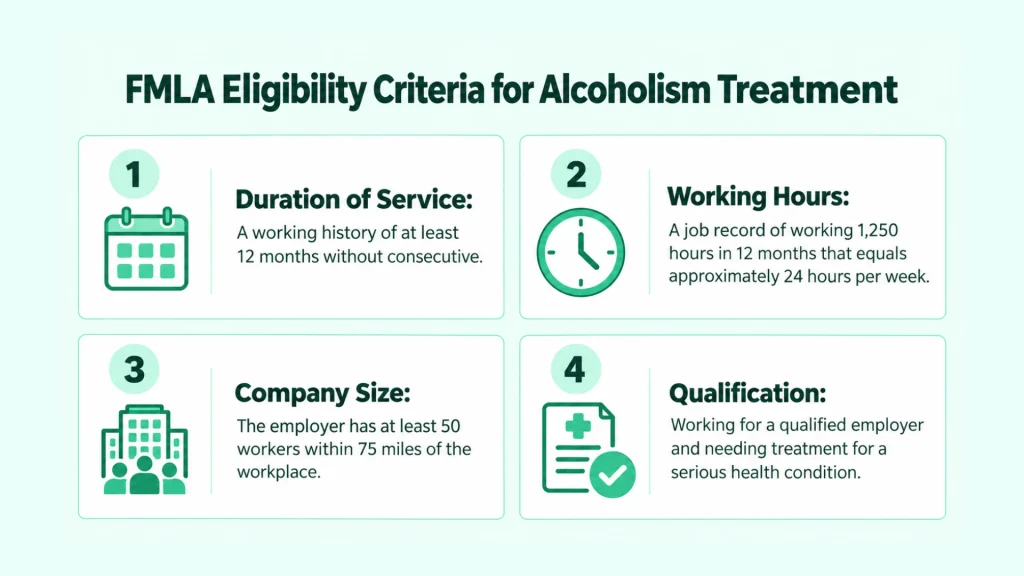
FMLA Eligibility Criteria for Alcoholism Treatment
It is always necessary to consider FMLA alcohol rehab as soon as possible when you are struggling with addiction or physical dependence. You can achieve and maintain sobriety with the right treatment and support. However, not every employee is eligible for FMLA alcoholism treatment. You need to meet the following eligibility criteria for FMLA:
- Duration of Service: A working history of at least 12 months without consecutive.
- Working Hours: A job record of working 1,250 hours in 12 months that equals approximately 24 hours per week.
- Company Size: The employer has at least 50 workers within 75 miles of the workplace.
- Qualification: Working for a qualified employer and needing treatment for a serious health condition.
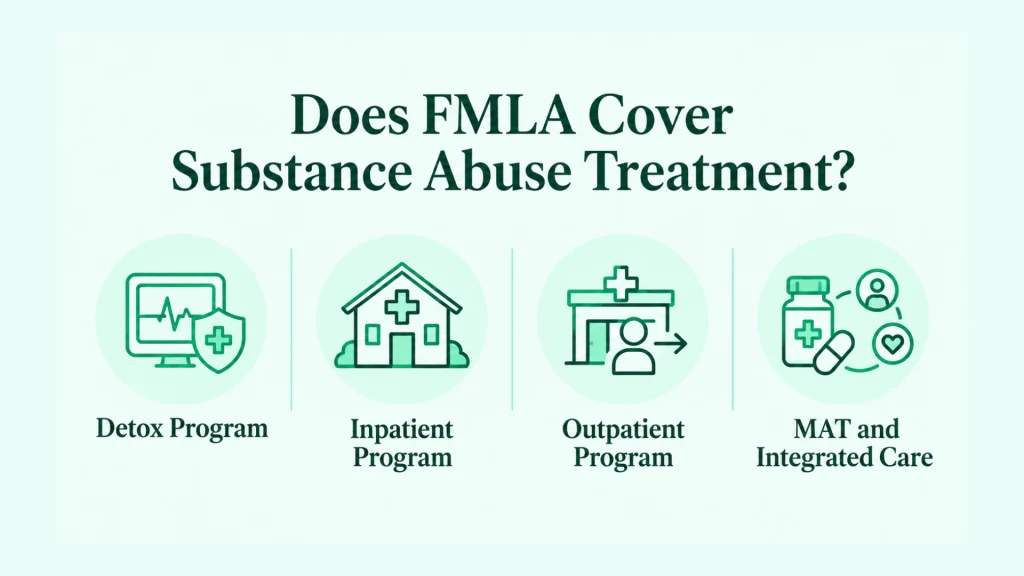
How Does FMLA Cover Substance Abuse Treatment?
Family and Medical Leave Act covers substance abuse treatment when a qualified and certified healthcare professional diagnoses alcohol addiction as a serious health condition, requiring specialized care. It allows individuals to access detoxification and different levels of care to receive confidential treatment for alcohol misuse.
Does FMLA Cover Medical Detox for Alcoholism Rehab?
FMLA for addiction treatment may cover a medically supervised detox program when it meets the defined criteria. It involves professional and intensive supervision to help individuals withdraw from alcohol and safely manage the potential withdrawal symptoms. The eligible employees need to confirm their leave requirements with the employer and rehab center.
Does FMLA Cover Inpatient Alcohol Rehabilitation?
Family and Medical Leave Act covers inpatient treatment when individuals need to stay at the rehab center to address Alcohol Use Disorder (AUD). A residential program offers 24/7 medical supervision, structured care, and counseling sessions. Employers may require the medical certification to approve the job-protected leaves for alcohol addiction rehabilitation.
Does FMLA Cover Outpatient Alcoholism Treatment?
FMLA provides coverage for partial hospitalization programs, intensive outpatient programs, and standard outpatient programs when they meet the requirements. Employees are qualified to receive the scheduled treatment sessions for alcohol use disorder that prevent them from performing job responsibilities. Individuals can take job-protected time off for treatment.
Does FMLA Cover MAT and Integrated Care for Alcoholism?
FMLA covers medication-assisted treatment and dual diagnosis treatment to treat alcohol use disorder. Integrated care also addresses the mental health conditions beyond treating only the addiction. Both treatments need to meet the legal criteria to receive confidential care to support lasting recovery. The coverage also depends on the individual’s medical condition.
Meet FMLA criteria and start your structured alcohol treatment at House of Zen.
Is Alcohol Addiction Considered a Serious Health Complication Under FMLA?
Alcohol use disorder is considered a serious health complication under FMLA depending on the circumstances and required treatment type. A serious health condition often involves inpatient or continuous treatment. Individuals may qualify for FMLA leave to receive medical alcohol detox, inpatient rehab, and ongoing treatment. It’s important to remember that FMLA protects absence for treatment, not absence caused by alcohol consumption.
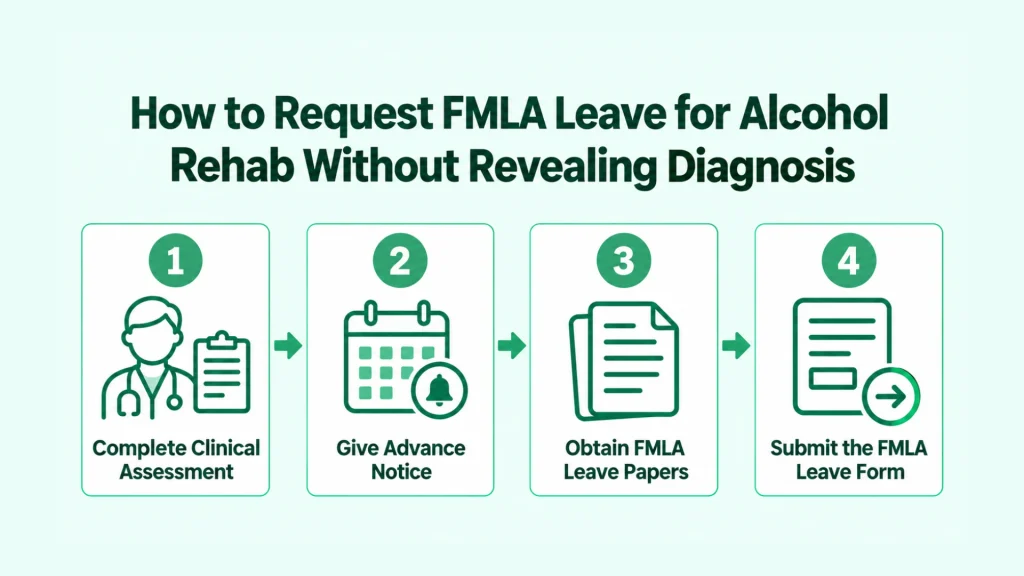
How to Request FMLA Leave for Alcohol Rehab Without Revealing Diagnosis
Employees should provide enough information to HR about their serious health condition to request FMLA leave. You may not disclose the specific diagnosis if you don’t want to tell your employer about the addiction.
- Complete Clinical Assessment: Go through the clinical evaluation to determine the required level of care and receive the medical certification.
- Give Advance Notice: Provide a 30-day advance notice to your employer except in urgent situations like same-day admission.
- Obtain FMLA Leave Papers: Receive the DOL’s WH-380-E certification from your employer within 5 business days of request.
- Submit the FMLA Leave Form: Submit the form for FMLA leave within 15 days for a smooth approval process to start treatment.
How Can I Check if My Employer Offers FMLA for Alcohol Treatment?
Covered employers often display a poster of FMLA availability for their employees. It also includes details for filing a complaint with the Wage and Hour Division for violation of the Family and Medical Leave Act (FMLA). An employer is required to provide the general notice to eligible employees about leave rights and benefits through written guidance or a handbook. Employees can also consult with the human resources department for more details about FMLA.
How Does FMLA Protect Your Job During Alcohol Addiction Rehab?
The Family and Medical Leave Act protects your job during alcohol use disorder treatment under federal law. Individuals can get up to 12 weeks of job-protected leave every year for residential or outpatient rehabilitation. Employees can return to their original job or an equivalent role with the same salary and benefits. It also protects you from retaliation because an employer cannot fire or demote you for requesting approved FMLA leave to treat alcohol dependence.
Does the Family and Medical Leave Act Protect Salary and Other Job Benefits?
The Family and Medical Leave Act (FMLA) does not protect an employee’s salary because it offers unpaid leave with job protection. That’s why employers are not bound to pay salary during alcohol rehabilitation. State programs may offer wage replacement, which is separate from FMLA. Employers should continue providing group health insurance benefits during FMLA-approved leave at the same level. You may replace your income through Short-Term Disability (STD) insurance and Paid Time Off (PTO).
Does FMLA Cover Alcohol Rehabilitation for Family Members?
FMLA covers alcohol rehab for family members, which means you can request the approved time off to take care of your loved ones during their addiction recovery journey. This means FMLA coverage is available for parents, spouses, and children. The federal Family and Medical Leave Act (FMLA) does not cover grandparents, grandchildren, siblings, and in-laws. However, you may be required to submit the medical certification for leave approval.
Does FMLA Cover the Cost of Alcohol Abuse Treatment?
FMLA does not cover the financial cost of alcohol abuse treatment because it only offers job-protected, unpaid leave. There is no financial treatment coverage for alcohol use disorder treatment. You may need private insurance, state health insurance plans, or employer-sponsored insurance coverage for alcohol misuse rehabilitation. FMLA and insurance verification allow you to proceed on your recovery journey with peace of mind.
How Long Does FMLA Cover Alcohol Addiction Rehab?
Family and Medical Leave Act (FMLA) covers alcohol misuse treatment for 12 weeks per year with job protection. The job protection is not guaranteed when you need leave beyond 12 weeks to address alcohol dependence. However, the unpaid leave for addiction treatment may be decided under the Americans with Disabilities Act (ADA). The decision for additional leave is made on a case-by-case basis.
What Does the Family and Medical Leave Act Not Cover?
FMLA does not cover employees’ absence due to alcohol consumption and impairment. FMLA for drug rehab is not covered as a voluntary treatment without clinical assessment. The coverage is also not available for non-medical services without the proper treatment plans. The employer may deny FMLA leave when individuals are seeking treatment and also using alcohol at the same time.
Can Your Employer Deny FMLA for Alcoholism Treatment?
The employer can deny FMLA for rehabilitation when employees are actively using alcohol. That’s why it is important to talk with the employer when you are struggling with alcohol use disorder and request FMLA leave. You need to follow the protocols of the Family and Medical Leave Act (FMLA) and coordinate with the HR department for smooth leave approval to access treatment without losing your job. There is no protection for individuals with active addiction.
Can You Get Fired for Going to Rehab?
Employers have the right to terminate employees when they violate the company’s alcohol and drug policy. Individuals can face the challenge of termination when their alcohol addiction interferes with their job responsibilities. However, it is important to remember that most employers are supportive when their employees are ready to recover from addiction through a proper rehabilitation plan.
How is the Family and Medical Leave Act Different from the Americans with Disabilities Act (ADA)?
The Family and Medical Leave Act (FMLA) allows individuals to balance personal and professional responsibilities. FMLA is a leave law that enables employees to pause work for a maximum of 12 weeks a year for family and medical reasons. Americans with Disabilities Act (ADA) is an accommodation and anti-discrimination law to keep qualified employees working.
FMLA offers temporary, unpaid leave for alcohol dependence treatment, while the ADA requires reasonable accommodation for individuals to perform their job duties. Moreover, FMLA applies to an employer with 50 or more employees, and the ADA applies to employers having 15 or more workers.
What Problems You Can Face With FMLA and Rehab
Individuals may experience several challenges even though FMLA offers job protection to eligible individuals during their recovery journey. Understanding potential problems allows you to avoid unnecessary complications and plan your leave. Here are the common problems individuals can face:
- Inability to meet FMLA eligibility criteria
- Medical certification requirements
- Unpaid leave and financial pressure
- Potential job security concerns
- Privacy and returning to work
How House of Zen LA Helps With FMLA for Alcohol Treatment
Our professional team helps our clients understand the Family and Medical Leave Act and request time off with job security. We encourage individuals to understand and meet the eligibility requirements to get unpaid leave for addiction treatment. Individuals with FMLA leave can easily start their alcohol rehab program at House of Zen LA without fear of termination. We provide a confidential and personalized treatment plan, allowing individuals to focus on their long-term alcohol addiction recovery.
Insurance Coverage for Alcohol Addiction Rehabilitation
The good news is that insurance covers rehab for alcohol, allowing individuals struggling with alcohol dependence to receive the required care without financial hurdles. Different insurance providers like Aetna, Cigna, and BCBS provide insurance coverage for alcohol treatment. You can easily verify insurance and understand the healthcare benefits. You can contact us for further options if your plan limit is already reached or you don’t have an insurance plan.
Have FMLA leave and are looking to access confidential treatment?
House of Zen offers confidential treatment to individuals with FMLA leave.
Start Your Alcohol Treatment With FMLA at House of Zen LA
Starting your recovery journey becomes smooth when you are receiving support from qualified and licensed healthcare professionals. At House of Zen LA, we guide individuals on the FMLA criteria for job-protected leave and provide them with an individualized rehab program to achieve sobriety. Let’s contact us today to access treatment with FMLA-approved leave!
Answers to Frequently Asked Questions About FMLA Covers Alcohol Rehab
Common questions about FMLA covering alcohol rehab are answered.
Does rehab qualify for FMLA?
Yes, rehab qualifies for FMLA because individuals can get job-protected leave for substance use disorder treatment. Employees need to meet the FMLA criteria to receive treatment for serious health conditions.
What conditions are not covered under FMLA?
The federal Family and Medical Leave Act (FMLA) does not cover short-term or minor illnesses, cosmetic procedures without medical necessity, routine preventive care, stress without a medical diagnosis, and care for extended family members.
Does FMLA cover 100% of pay?
No, the Family and Medical Leave Act (FMLA) does not cover 100% of pay because it is only unpaid, job-protected leave. Employers are not required to pay your salary when you are on FMLA for alcohol rehab.
How to survive financially on FMLA?
You need to consider different financial options to survive when you are on FMLA because it is unpaid leave that offers only job protection for eligible employees. Alternative income sources may include Short-Term Disability (STD) insurance, intermittent leave, state Paid Family and Medical Leave (PFML), and accrued Paid Time Off (PTO).
Is it hard to get FMLA approved?
No, it is not legally hard to get FMLA approved when you meet the eligibility criteria or requirements. However, medical certifications and the paperwork process may seem slow and stressful.
Can I use PTO while on FMLA?
Yes, you can use accrued Paid Time Off (PTO) while you are on FMLA leave. How PTO works depends on federal law and the company’s policy. This means you will receive your regular pay when you are on 12 weeks of FMLA-approved leave.
