







Rehab scams involve patient or body brokering rehab, misrepresented or fake services, insurance overbilling or misleading claims, and patient enticement. These scams also include unsolicited referrals or lead buying, facility impersonation (bait-and-switch), fake reviews and success rates, and patient privacy violations. These alcohol and drug rehab frauds may exploit individuals seeking structured substance use disorder treatment. You need to consider receiving treatment at a trustworthy rehab center like House of Zen to protect yourself from addiction treatment frauds.
✨ Highlights:
- Explore and understand the potential rehab scams.
- Consider warning signs to protect yourself from treatment frauds.
- Verify the legitimation of a rehab facility before starting your treatment.
- House of Zen is a trustworthy rehab center that protects individuals from scams.
What are Rehab Scams?
A rehab scam is an unethical and fraudulent practice in addiction treatment where the rehab center’s priority is insurance and financial benefits over an individual’s care. Federal and state agencies reported billions of dollars lost to fake rehab facilities, patient brokering, and fraudulent medical billing in recent years. Understanding the addiction treatment scams helps you receive treatment with transparency and protect yourself from financial loss. Let’s explore the potential fraudulent rehab activities.
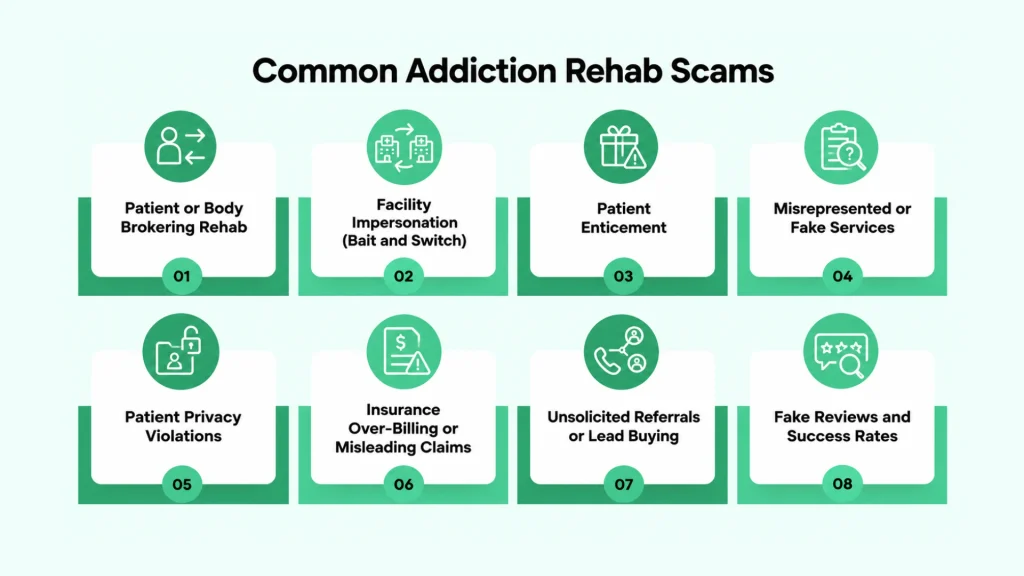
Patient or Body Brokering Rehab
Body broker rehab is an unethical and illegal practice where a rehab center transfers a vulnerable individual struggling with a substance use disorder to a specific detox center, a rehab facility, or sober living homes. This rehab fraudulent activity involves a finder’s fee or a financial kickback.
In patient brokering, a rehab center pays third parties for individual referrals. That’s why individuals are treated as commodities rather than those requiring treatment. ‘Addiction Tourism’ is a common term in body brokering treatment that involves sending an individual out of the state for rehabilitation purposes.
Facility Impersonation (Bait and Switch)
Facility impersonation is a deceptive practice in which scammers falsely pretend or advertise a legal and highly rewarded rehab facility. The purpose is to capture an individual’s interest and redirect them to a completely different, high-cost rehab alternative. Call centers usually answer phone calls and pretend to work at a well-established treatment center.
Fraudsters’ deception forces individuals to believe they are communicating with a representative of the trusted rehab facility due to manipulation. They often pressure individuals to book an appointment immediately with a tactic of limited availability.
Patient Enticement
Patient enticement is a scamming practice that involves offering illegal or unethical incentives, including valuable amenities, food, flights, gifts, and cash. These incentives often persuade individuals to enter and stay at the fraudulent rehab center for their substance use disorder treatment.
In patient enticement, individuals often do not need to pay for airfare while receiving financial compensation. It also involves free insurance as well as a referral fee for addiction treatment coverage. That’s why individuals struggling with financial conditions may find it a lifeline and get trapped into it easily.
Misrepresented or Fake Services
Fake or misrepresented services are a form of fraud that happens when a rehab facility misleads individuals about medical staff, credentials, ownership, and addiction treatment services. These are tactics to attract potential individuals while billing government or insurance providers.
Scammers also lie about the accreditation of their rehab facilities and the treatment they offer for substance use disorder. They also show fake or exaggerated affiliations to grab individuals’ attention. Misrepresented services may include sober living scams to keep individuals in an unsafe environment and collect treatment payouts.
💡 Did You Know
In 2020, 5 defendants were charged with criminal offenses for a $3.2 million health insurance and sober living fraud scheme in Southern California.
Patient Privacy Violations
A patient privacy violation is an unauthorized disclosure, use, or access of an individual’s Protected Health Information (PHI) during the recovery journey. Breaching a patient’s privacy is fraud according to state and federal confidentiality laws, such as the Health Insurance Portability and Accountability Act (HIPAA).
The common violations may include employee snooping, improper disposal, unauthorized disclosure, unsecured communications, and delayed breach notifications. Sharing sensitive information without medical necessity is often practiced by rehab centers that are involved in scamming individuals.
Insurance Over-Billing or Misleading Claims
The rehab insurance scams usually involve billing insurance providers excessively for unnecessary services or treatments. Insurance over-billing is a common fraud in urine drug screening. It also involves billing insurance companies for services that are not provided to individuals.
Unnecessary or excessive testing is also a fraudulent approach to bill the insurance maximum during treatment. Rehab scammers also use false medical records to extend the treatment duration to keep charging insurance for rehabilitation. ‘Change in address’ is also a tactic in insurance fraud for overbilling for specific treatment.
Unsolicited Referrals or Lead Buying
The unethical operators in the addiction rehab sector also purchase leads from online marketing companies. They often use these leads to engage individuals aggressively, regardless of whether their rehab center meets the individuals’ treatment requirements. Scam recruiters use social media or texts for their fraudulent activities.
They also use high-pressure sales tactics rather than clinical evaluation to determine the appropriate level of care for the specific substance use disorder. These unsolicited referrals are major components of fraudulent activities in the rehab industry.
Don’t Let Rehab Scams Affect Your Addiction Recovery Journey
You may access confidential treatment at House of Zen that maintains transparency in every aspect, eliminating the risk of fraud.
Fake Reviews and Success Rates
Inflated success rates and fake reviews are deceptive marketing tactics in addiction treatment. These are common approaches in rehab scams to engage individuals who are seeking drug or alcohol addiction treatment for lasting recovery. Unethical rehab centers use fake reviews to build credibility or mask poor clinical outcomes.
Scammers often focus on using vague superlatives, marketing slogans, and clustering 5-star ratings while lacking specific information about daily schedules and clinical therapies. The accounts leaving 5-star reviews often do not have a prior review history.
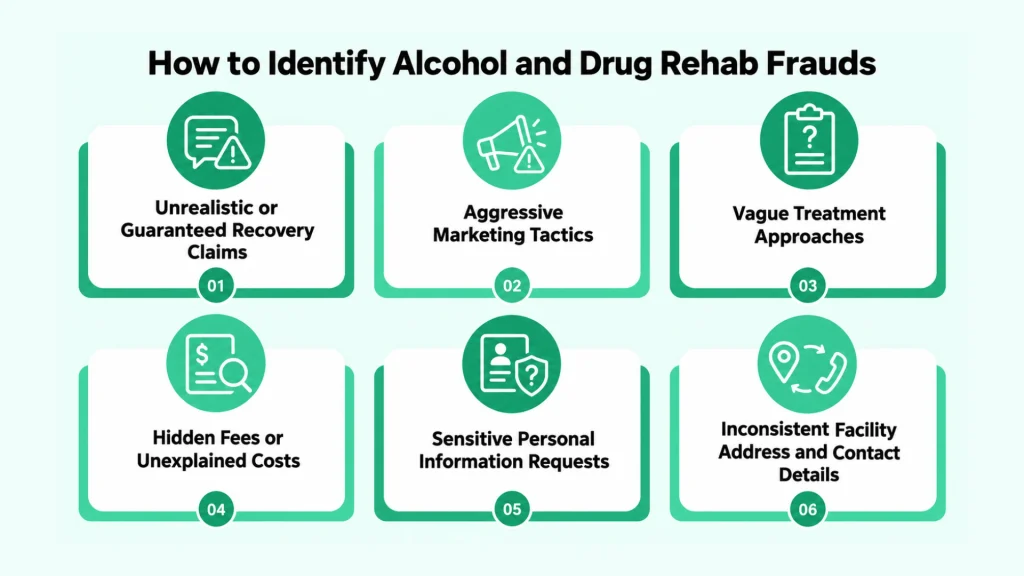
How to Identify Alcohol and Drug Rehab Frauds
You need to watch for specific warning signs and verify the credentials of the rehab facility through state licensing boards and official directories like SAMHSA to identify drug and alcohol treatment frauds. Identifying rehab scams at the early stage protects you from financial loss and allows you to receive reliable treatment.
Unrealistic or Guaranteed Recovery Claims
Reliable and reputable rehab centers understand that addiction recovery is a dedicated, long-term commitment. You should be aware of medical providers who guarantee success rates or promise quick substance disorder recovery. That’s why you need to avoid these rehab facilities and choose the House of Zen that offers a transparent recovery experience without fake promises.
Aggressive Marketing Tactics
Legitimate rehab facilities do not rely on high-pressure marketing tactics to capture potential clients. Consistent emails, calls, and messages are clear indicators of addiction treatment scams. The aggressive marketing techniques are used to trap individuals and leverage their insurance benefits. It is recommended to be aware of addiction treatment facilities that are marketing aggressively.
Vague Treatment Approaches
It is important to consider vague treatment methods as a trigger for addiction rehab scams. Reliable rehabilitation centers have evidence-based and clear substance use disorder treatments. The fraudulent rehab facilities use vague descriptions of the treatment services or use revolutionary approaches.
Hidden Fees or Unexplained Costs
Transparency about treatment costs plays a significant role in the reliability of the rehabilitation centers. It indicates a fraudulent practice when a rehab facility is unclear about treatment expenses and insurance coverage. Reputable treatment facilities offer detailed addiction treatment plans with transparent pricing, allowing individuals to understand overall treatment financial aspects.
Sensitive Personal Information Requests
You should be cautious of call centers that start asking about personal details immediately, including insurance and security number information. It is recommended to avoid sharing personal details upfront before discussing your condition and clinical assessment. Trustworthy rehab centers like House of Zen assess your condition before discussing the financial aspects of treatment.
Inconsistent Facility Address and Contact Details
The fake or fraudulent rehabilitation centers often use inconsistent contact details and facility addresses to trap individuals. These vague details regarding the addiction treatment centers point to misleading marketing and potential rehab fraud. Online listing businesses share the fake contact details. The consistent name, address, and phone number (NAP) make House of Zen LA a reliable choice for individuals seeking addiction treatment.
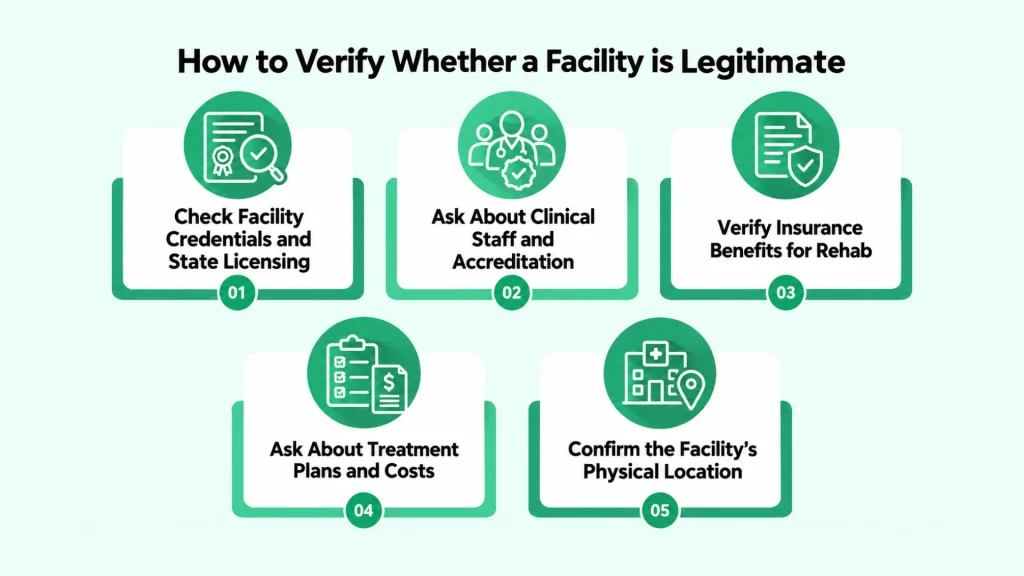
How to Verify Whether a Facility is Legitimate
You can check state licensing and facility credentials, accreditation and clinical staff, insurance benefit verification, treatment plans and costs, and the facility’s physical location. These aspects help you verify whether a rehab facility is legitimate for addiction treatment. You can also contact us to start your treatment at a legitimate, luxury rehab facility for long-term sobriety.
Check Facility Credentials and State Licensing
The first approach towards overcoming rehab scams is checking the facility credentials and state licensing. A licensed and accredited rehab facility helps individuals protect themselves from fraud and helps them recover through structured treatment approaches. These accreditations and licenses ensure smooth clinical care and patients’ safety.
Ask About Clinical Staff and Accreditation
The medical staff at House of Zen has all accreditations to provide the required care in a confidential and safe environment. The qualified staff has experience treating substance use disorders through FDA-approved medications. The professional team includes a director, medical and clinical team, and operations manager for a streamlined experience.
Verify Insurance Benefits for Rehab
In-network rehab facilities usually have an agreement with different insurance companies offering reliable treatment services at negotiated rates. It’s a fact that in-network coverage offers better insurance coverage for addiction rehab programs. Insurance providers often pay directly to rehab facilities with predictable costs.
Ask About Treatment Plans and Costs
A legitimate addiction treatment center often offers transparent rehabilitation plans and costs. Clear plans with insurance coverage and out-of-pocket costs help you start your recovery easily without facing any financial challenge or hidden fees. You can easily view the treatment plans available for different substance use disorders.
Confirm the Facility’s Physical Location
It is important to confirm the physical location of the rehab center when you want to protect yourself from online rehab scams. The confirmation of the treatment center’s location allows you to access a trustworthy rehab facility for addiction treatment plans. House of Zen, located in California, is serving clients nationwide.
How House of Zen Can Prevent You from Alcohol and Drug Rehab Fraud
Trusted rehab centers like House of Zen LA protect individuals from addiction treatment and insurance scams. We maintain accreditation and licensing, transparent medical billing practices, and ethical standards for addiction rehabilitation. At the luxury rehab facility, we offer direct insurance verification with clear costs for individuals seeking treatment for substance use disorders like alcohol or opioid addiction for lasting sobriety.
There are no enticements to trap individuals in addiction treatment plans. We also do not consider referral fees when individuals are moving from our rehab center to another for their rehab needs. Our licensed staff offers individualized treatment plans with aftercare programs to reduce the risk of relapse and strengthen addiction recovery. We also maintain an internal complaint process to allow individuals to report staff’s unethical behavior and maintain integrity.
Contact us and start Your Treatment at House of Zen for long-term recovery without addiction rehab frauds.
Start Your Addiction Treatment at House of Zen with No Rehab Scams
You can access structured, confidential treatment at House of Zen LA without the risk of rehab scams. The certified and experienced professionals at the trustworthy rehab center are ready to assist with appropriate treatment plans and explain how insurance covers rehab to reduce the financial burden. You can talk with our admissions team to schedule your appointment and start your treatment today. Let’s contact us to verify your insurance plan for treatment coverage and achieve long-term recovery!
Answers to Common Questions About Rehab Scams
Frequently asked questions about addiction rehab scams are answered.
How do recovery scams work?
Recovery scams work by targeting individuals who have already lost their money to addiction treatment frauds. Scammers claim to bring those funds back in exchange for personal data or upfront charges.
How to avoid rehab scams?
You can avoid rehab scams by watching for the potential indicators that point to fraudulent addiction treatment activities. You can also verify the rehab facility before starting treatment to avoid fraud.
What are the warning signs of fraudulent rehab facilities?
Unrealistic or guaranteed recovery promises, aggressive marketing tactics, vague treatment approaches, unexplained costs or hidden charges, inconsistent facility address and contact details, and requests for sensitive personal details are the warning signs of fraudulent rehab facilities.
Where can I report a fraudulent rehab facility?
You can report a fraudulent rehab facility by filing a complaint with the state licensing agency, the Department of Health Care Services (DHCS). DHCS helps you verify the licensing and certifications.
Are there organizations that help verify rehab center legitimacy?
The Department of Health Care Services (DHCS) and the Commission on Accreditation of Rehabilitation Facilities (CARF) help you verify the current licensing of a rehab center and the accreditation of an addiction program.
Is there a trustworthy rehab center without scams?
Yes, House of Zen LA is a trustworthy rehab center that offers transparent addiction treatment plans without unrealistic recovery promises and unexplained costs.
