





Seeking treatment for drug or alcohol addiction is the most important investment you make for your health. The cost of rehabilitation usually raises questions about affordability, particularly for clients paying out of pocket. The most asked question is “Is rehab tax deductible?” Yes, rehab is tax-deductible because the Internal Revenue Service (IRS) classifies alcohol and drug rehab as a deductible medical cost. IRS allows taxpayers to deduct specific unreimbursed medical costs and qualified addiction treatment. The eligibility criteria depend on factors like itemized deduction, insurance reimbursement, and total medical cost.
✨ Highlights:
- Alcohol and drug addiction is tax-deductible for individuals.
- Eligibility and medical necessity are required for tax deduction.
- Levels of care, MAT, therapies, psychiatric assessment, and detox are tax-deductible.
- Luxury accommodations, childcare, and non-medical services are not eligible.
What is a Rehab Tax Deduction?
A rehabilitation tax deduction is a potential benefit that allows eligible taxpayers to deduct certain unreimbursed addiction treatment costs as qualified medical expenses on their federal income tax return. Deduction may reduce the taxable income, which lowers the tax you owe rather than offering a tax credit.
The Internal Revenue Service (IRS) usually considers Substance Use Disorder (SUD) as a medical condition. That’s why expenses related to diagnosis, treatment, or managing addiction may qualify as a medical cost when they meet the applicable criteria of the IRS. Eligible medical expenses are considered tax-deductible if they are not reimbursed by insurance and other sources.
Is Alcohol and Drug Rehab Tax Deductible?
Both drug and alcohol addiction rehab may be tax-deductible in several cases because of treating a diagnosed medical condition. IRS usually assesses the purpose of treatment rather than the involvement of a particular substance, whether you are being treated for stimulant misuse, opioid dependence, or alcohol use disorder.
The eligible rehab tax-deductible services may include different levels of care for detox and treatment of both alcohol and drug addiction. However, attending recovery-focused vacations or wellness retreats is not automatically covered in the cost deductible. For tax-deductible purposes, the addiction treatment should be medically necessary and provided within licensed rehabilitation facilities.
When is Rehab Tax Deductible?
Rehab costs are tax-deductible when they satisfy IRS criteria for qualified medical expenses. The rehab may meet requirements when the primary purpose of addiction treatment is medical care and is provided by qualified professionals. When the expenses are unreimbursed, the treatment cost may also qualify for the tax deduction. The itemized deductions are only available to you on your federal tax return.
The cost of rehab is also tax-deductible when you maintain the proper documentation of invoices, receipts, prescriptions, insurance statements, and medical records. However, the deductible amount depends on the rules of the Internal Revenue Service (IRS) and overall medical costs. You can also consult with a tax professional to keep tax returns accurate and claim qualified deductions.
How Does the IRS Qualify Medical Treatment Expenses?
The Internal Revenue Service (IRS) qualifies medical treatment costs as unreimbursed costs for diagnosis, mitigation, treatment, or prevention of addiction. Medical necessity is required by the IRS for qualifying rehabilitation costs. Understanding important factors in qualified medical treatment may help you with the tax deduction.
What is Considered as Medical Care?
Medical care includes procedures and services used for the diagnosis, treatment, or prevention of substance use disorder, and mental or physical health. It involves the personalized treatment aimed at alleviating the specific medical condition. Preventive and support services are usually included in the medical care for the betterment of individuals.
Personal Choice VS Medical Necessity
Alcohol or drug rehabilitation costs qualify for tax-deductible expenses only if they are medically necessary rather than a personal choice. That’s why you need to itemize these expenses on IRS Schedule A for deduction. The portion of total unreimbursed medical costs exceeding 7.5% of Adjusted Gross Income (AGI) is written off for deductible tax.
Eligible Healthcare Providers and Facilities
The medical costs for drug and alcohol addiction treatment must be paid to the accredited rehab centers or licensed healthcare providers to claim the deductible tax. Medical specialists, certified therapists, inpatient and outpatient facilities, and ancillary providers are eligible for the rehabilitation tax deduction.
Are You Ready for Tax-Deductible Rehabilitation?
Contact us today and start your tax-deductible addiction treatment at the House of Zen LA for long-term recovery.
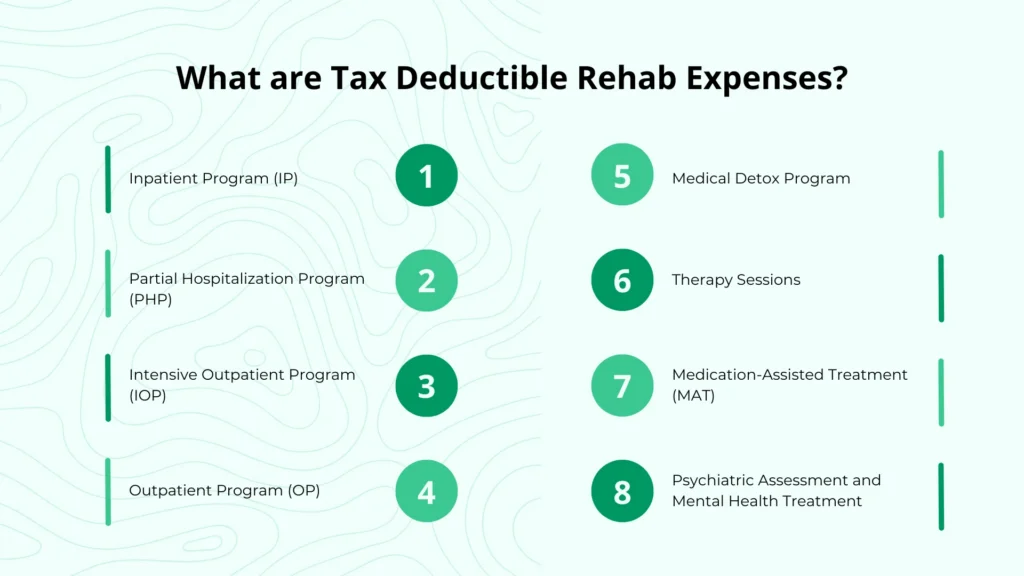
What are Tax Deductible Rehab Expenses?
There are different eligible addiction treatment services that may qualify for claiming tax deductions. These rehabilitation services are commonly used to diagnose and address different types of addiction. The exact deductible amount depends on IRS rules, insurance reimbursement, and the individual’s tax condition.
Inpatient Program (IP)
Residential treatment usually qualifies for tax-deductible status when it involves a proper diagnosis of substance use disorder and itemization of deductions. Individuals are hospitalized 24/7 in an inpatient program under the supervision of licensed professionals. All costs associated with inpatient care are generally tax-deductible.
Partial Hospitalization Program (PHP)
The treatment expenses in the partial hospitalization program are also eligible for tax deduction. Mental health and substance use disorder treatments in PHP are considered valid medical costs. Out-of-pocket costs and related medical expenses in the partial hospitalization treatment are easily tax-deductible.
Intensive Outpatient Program (IOP)
The rehab costs of an intensive outpatient program are qualified medical expenses under the IRS guidelines. You need to itemize your tax return on Schedule A (Form 1040) to deduct your medical expenses for addiction dependence treatment. It is required to follow the IRS rules for the successful claim of medical expenses.
Outpatient Program (OP)
Outpatient programs for alcohol and drug addiction rehab are tax-deductible treatment costs. It is necessary that your out-of-pocket cost exceeds 7.5% of your Adjusted Gross Income (AGI) to qualify for tax-deductible expenses. You are required to itemize treatment costs deduction on Schedule A of IRS Form 1040.
Medical Detox Program
Medically supervised detoxification is the initial step in alcohol and drug addiction recovery. The detox program offers intensive supervision while allowing the body to withdraw from addiction. Qualified detoxification costs as deductible medical expenses may include monitoring, use of medications during withdrawal, and medical assessment.
Therapy Sessions
The cost of individual, group, and family therapy sessions conducted by the licensed therapists may qualify for a tax deduction. Behavioral therapies such as Cognitive Behavioral Therapy (CBT) and Dialectical Behavior Therapy (DBT) are often used in alcohol and drug rehab to improve the treatment costs.
Medication-Assisted Treatment (MAT)
Medication-assisted treatment combines FDA-approved medications and behavioral therapies to help individuals recover from opioid addiction or alcohol addiction. Potential tax-deductible expenses may include treatments involving naltrexone, methadone, and buprenorphine. Counseling, medication management, and physician visits during MAT qualify for a deduction.
Psychiatric Assessment and Mental Health Treatment
Several individuals entering rehab usually experience co-occurring mental health conditions such as bipolar disorder, PTSD, depression, or anxiety. The certified psychologists or psychiatrists offer assessment and treatment, qualifying for a deduction as part of addiction treatment. Treating both conditions through dual diagnosis treatment contributes to recovery.
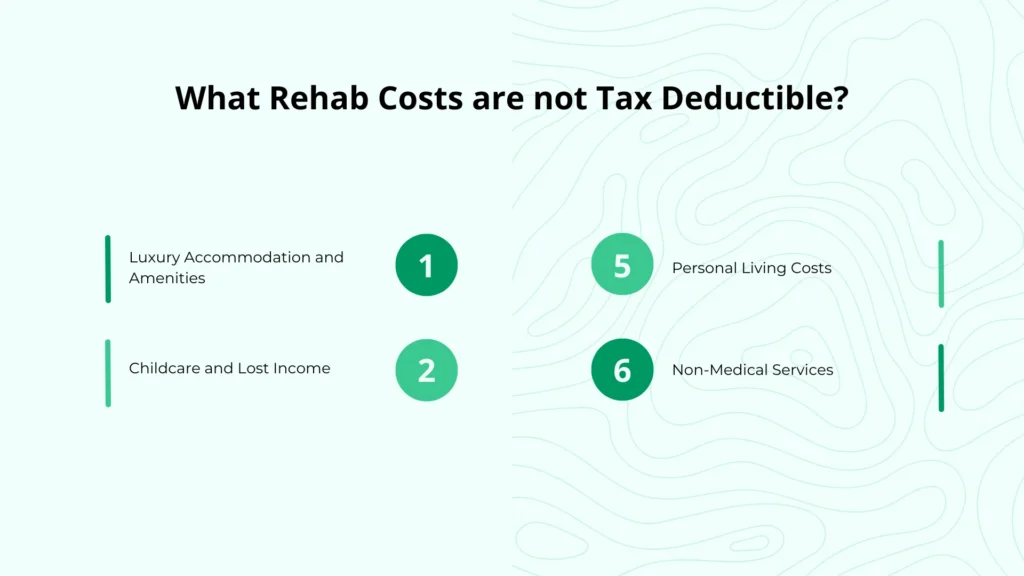
What Rehab Costs are not Tax Deductible?
Many addiction treatment services qualify for tax deduction, but not every cost related to rehab is deductible. The primary personal or recreational costs during the rehab journey are usually excluded from the tax deduction.
Luxury Accommodation and Amenities
The premium accommodation services during the treatment, such as private suites, spa services, gourmet dining, and resort-style amenities, are not included in the rehab tax deduction. There are additional charges for luxury amenities, even though the treatment qualifies for tax compensation. These luxurious facilities are considered personal expenses.
Childcare and Lost Income
Expenses that are indirectly linked to attending rehab are often not deductible. The costs of childcare during treatment, lost business income, missed wages, and household assistance unrelated to rehab are not included in rehab tax-deductible expenses. These costs are usually considered personal financial expenses.
Personal Living Costs
Everyday living expenses are not part of the tax deduction when someone is enrolled in rehab for recovery. These costs may include personal entertainment, regular clothing, personal purchases, housing costs outside of qualified rehab, and meals unrelated to the medical care. Tax reporting becomes easier by separating personal expenses from medical costs.
Non-Medical Services
There are different wellness activities, such as spa, massage, fitness membership, cosmetic treatment, and recreational excursions to support the recovery journey. However, these activities are not always deductible until they are considered medically necessary in a treatment plan. Qualification may depend on applicable tax rules and medical purposes.
Eligibility Criteria for Claiming Drug and Alcohol Rehab Costs
Medical care for addiction rehab services usually qualifies for the tax deduction. However, it is important to understand the eligibility criteria for claiming the rehab expenses. You need to satisfy IRS requirements before claiming a tax deduction.
Proper Records
Good recordkeeping is required when you are planning to claim the rehab costs. It is essential to keep receipts, itemized invoices, insurance statements, prescription records, payment confirmations, mileage use for medical travel, and physician recommendations. Accurate documentation allows you to calculate the eligible costs and support your claim.
Itemized Deductions
It is important to itemize deductions on the federal tax return to claim the medical expenses instead of considering the standard deduction. You cannot claim the separate rehab costs deduction if you are choosing the standard deduction. That’s why itemized deductions are recommended for a smooth expense claim experience.
Medical Expense Threshold
The Internal Revenue Service (IRS) allows taxpayers to deduct the portion of qualified unreimbursed medical costs that exceed the specific percentage of Adjusted Gross Income (AGI). This threshold may change under tax law because consulting with a qualified tax professional and reviewing the IRS guidelines is necessary for preparing your return.
Non-Reimbursed Costs by Insurance
You are usually unable to deduct costs that have already been reimbursed or paid by Medicaid or Medicare, private health insurance, employer reimbursement program, or workers’ compensation. It means only the out-of-pocket costs may qualify for a tax deduction during the rehabilitation program.
💡 Did You Know
A claim for refund should be filed within 3 years from the date of filing the original return or within 2 years from the date the tax was paid.
Does Insurance Affect Tax Deduction for Alcohol and Drug Rehab Programs?
Health insurance plans can reduce the treatment costs, but they also affect the tax deduction for addiction rehab programs. When an insurance company pays for your addiction treatment, you usually cannot deduct the reimbursed amount. It means only eligible out-of-pocket expenses generally qualify for a tax deduction. Moreover, rehab payments made from the Health Savings Account (HSA) or Flexible Spending Account (FSA) cannot be claimed for tax deduction. Moreover, we assist you in insurance verification for affordable rehab services.
Can You Deduct Rehab Costs for Your Family?
You can deduct rehab expenses for your family members paid on their behalf. It is necessary to consider IRS eligibility requirements when you are looking for a smooth and transparent tax deduction without facing any challenges.
Spouse
The medical expenses are qualified for tax deduction if you make a payment for eligible unreimbursed addiction treatment costs. It is also essential to align with the IRS rules for tax-deductible rehab services.
Dependent Child
Parents can also pay the qualified medical expenses for their dependent children. That’s why eligible children may receive the smooth addiction rehabilitation services. These expenses are usually covered within the parents’ own medical expenses.
Qualified Dependents
Certain qualified dependents are also eligible for tax-deductible addiction treatment under the IRS rules. It may be required to consult with a tax professional to determine qualified expenses due to complex dependency requirements.
How House of Zen Helps You Navigate Rehab Expenses in Los Angeles
Understanding the addiction treatment expenses may feel overwhelming, but you do not need to worry about it. At House of Zen LA, our admission team helps families and individuals access the high-quality rehab services with the available payment options. We help you verify insurance benefits and understand the out-of-pocket expenses.
The professional team at our alcohol and drug rehab center recommends the ideal level of care depending on the clinical requirements. You can ask our team about the admission procedure and treatment options. We offer transparent pricing without the hidden costs because our goal is to remove the financial barriers.
Want to Navigate Addiction Treatment Costs for Lasting Recovery?
Don’t hesitate to call us and schedule your appointment for an affordable addiction rehab program in Los Angeles.
Start Your Rehab Journey at the House of Zen
You don’t need to worry about financial burden when you are starting your treatment at House of Zen for lasting recovery. We help you explore rehab tax-deductible options in Los Angeles, allowing individuals to start drug and alcohol treatment easily. Let’s talk with our admission team to start your treatment journey today!
Common Questions About Rehab Tax Deductible Answered
Here are answers to frequently asked questions about tax deductions for rehab.
What kind of medical expenses can you write off on taxes?
You can write off expenses that exceed 7.5% of Adjusted Gross Income (AGI). It allows you to deduct unreimbursed out-of-pocket expenses for the diagnosis, mitigation, treatment, cure, and prevention of disease.
Can I write off therapy expenses on my taxes?
Yes, you can write off therapy expenses on your taxes if they are required to treat substance use disorder or mental health disorder. It is applicable when your total out-of-pocket costs exceed 7.5% of Adjusted Gross Income (AGI).
Is it worth claiming medical expenses on your taxes?
Yes, it is worth claiming medical expenses on your taxes when out-of-pocket expenses exceed 7.5% of Adjusted Gross Income (AGI). Moreover, you can also benefit when total itemized deductions are higher than the standard deduction.
Can you claim a gym membership on a tax return?
No, you cannot claim a gym membership on a tax return because the Internal Revenue Service (IRS) considers it a personal cost. However, you can write it off in case of medical necessity and business expense.
Is drug rehab tax deductible?
Yes, drug rehab is tax-deductible when it qualifies as a medical expense under the IRS rules. Eligible unreimbursed costs may cover the detox program, IP, PHP, IOP, OP, MAT, and therapy sessions through itemized deduction.
Is sober living tax deductible?
Sober living may become tax-deductible if it is considered a part of a medically necessary treatment plan. However, a personal choice for sober living may not qualify for a tax deduction under IRS guidelines.
