




Alcohol dependence is a rising problem that affects millions around the world and often takes lives without letting them know. That’s why it is important to understand the top 10 signs of alcohol addiction.
- Changes in Appearance
- Impact on Self-Esteem and Personality
- Being Unable to Stop Once You Start
- Frequently Asking to Borrow Money
- Most Time Spent Away from Home
- Unable to Handle Responsibilities
- Drinking as Stress Relief
- Isolation and Secrecy
- Experiencing Withdrawal
- Quitting Alcohol Feels Impossible
✨ Key Takeaways:
- Alcohol Addiction affects millions of people.
- Individuals experience the physical and psychological effects of alcoholism.
- Identifying the top 10 signs of alcohol addiction is helpful for early intervention.
- Personalized treatment options are available for alcohol addiction.
According to the World Health Organization (WHO), the harmful use of alcohol is a causal factor in more than 200 diseases and injuries. Understanding the difference between alcohol addiction and social drinking is crucial. Social drinking typically doesn’t involve a loss of control or negative life consequences, whereas addiction does.
According to NSDUH research in 2023, approximately 24.3 million individuals aged 12+ suffer from Alcohol Use Disorder (AUD) or have serious alcohol related issues in their lives.
Identifying the signs of alcoholism early is essential for timely intervention. Professionals often use criteria from the American Psychiatric Association (APA) and its Diagnostic and Statistical Manual of Mental Disorders, the DSM-5, to formally diagnose AUD. For initial assessments, healthcare providers may use simple screening questionnaires, such as the CAGE or AUDIT-C tools, to quickly evaluate risk.
What Is Alcohol Addiction?
Alcohol Use Disorder (AUD) is a relapsing neuropsychiatric condition marked by dysregulated mesolimbic dopamine. It usually signals compulsive ethanol intake. NIAAA and DSM-5 operationalize it via an 11-item criterion set stratified into mild, moderate, and severe tiers.
Is Your Mental Health Being Affected by Alcohol Addiction?
Get help from the House of Zen to recover smoothly from Alcoholism.
What Happens When You Drink Alcohol?
Simple:
- It travels in your bloodstream through your stomach and intestines, then goes into your organ systems, including your brain. The amount of alcohol in your blood is measured as Blood Alcohol Concentration (BAC).
- Your brain’s working capacity weakens, altering how you think, feel, and act. If you regularly drink alcohol, your brain becomes dependent on it.
- It is because alcohol modifies the functioning of chemicals within your brain, specifically neurotransmitters.
Technical:
- Prodromal features include escalating pharmacodynamic tolerance, reward-salience preoccupation, executive-function erosion, and affective lability often evidenced by anhedonia, dysphoria, and irritability during brief abstinence intervals.
The Physical & Psychological Signs of Alcohol Addiction
Alcohol addiction can affect the body and mind, leading to psychological and physical changes that may disrupt everyday life. Psychological & physical effects of alcohol are the key warning signs of alcohol abuse.
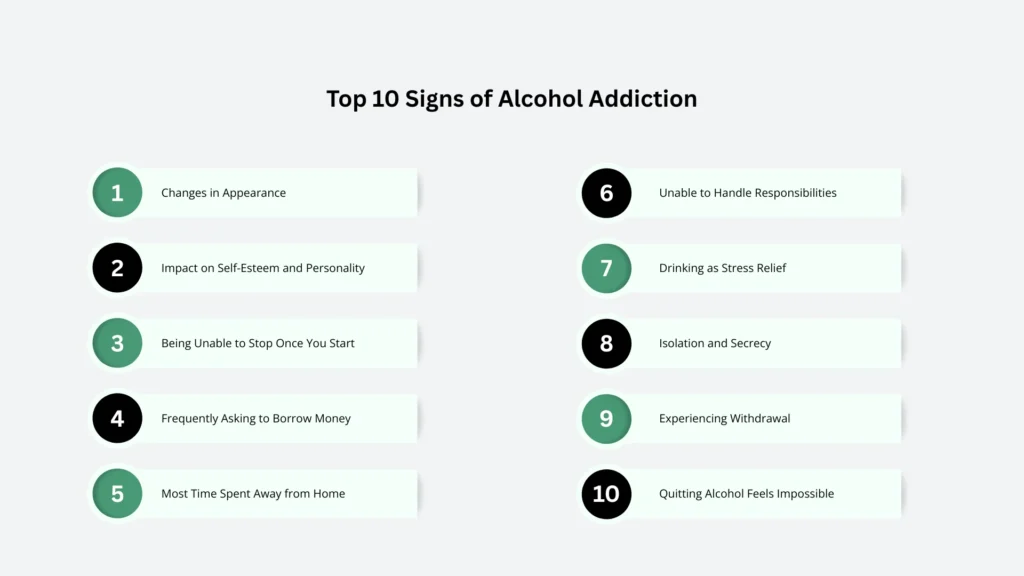
Here are the most common alcoholism signs from which you can tell that someone in your life could be struggling with alcoholism. The signs of an alcohol problem also help you understand how to recognize alcoholism in a loved one.
- Changes In Appearance
Excessive consumption of alcohol or drugs could end up in physical changes that are difficult to ignore, including:
- Instant weight fluctuations (gain and loss).
- Sleep problems, like drowsiness or insomnia.
- Unusual bruises or marks across the body.
- Red eyes
- Cold sweats, shaky hands, or sweaty palms.
- A flushed or puffy face
- Pale skin tone
- Recurring nausea or vomiting
- Energy levels drained, and constant fatigue.
Serious health issues can develop over time, which are some of the physical effects of long-term alcohol use, such as liver disease. These signs of an alcoholic include conditions like fatty liver and eventually cirrhosis.
- Impact on Self-Esteem and Personality
Alcohol dependence can have an impact on one’s confidence, which eventually changes a person’s personality. Like, people who consider themselves worthless may rely on alcohol to feel comfortable in social gatherings. Due to these feelings, their behavior is too loud and moody, with anger or frustration.
These changes cause relationship problems and a struggle to maintain the responsibilities of a professional or personal life.
- Being Unable to Stop Once You Start
Alcohol tolerance is usually high in those who are affected by alcohol addiction. This often involves Binge or Excessive Drinking, which the Centers for Disease Control and Prevention (CDC) defines as consuming a certain amount of alcohol in about 2 hours.
After just one drink, some people may feel the effects of alcohol, but others who are dependent on alcohol may find it difficult to stop until they don’t have more. They don’t feel intoxicated after several beers.
Their tolerance will keep increasing over time. As a result, they will require progressively more alcohol to get the intended effects. That’s why it is also one of the warning signs of alcohol dependence.
- Frequently Asking to Borrow Money
Signs that someone you care for may be struggling with addiction include sudden changes in behavior, such as frequently borrowing money from you without a genuine reason. While asking for money is not a problem, when they ask daily, then it is a sign that cannot be neglected. Paying attention to these minor actions reveals deeper secrets.
- Most Time Spent Away From Home
A person may have an AUD if they’re making excuses regularly to go to the store but come back empty-handed. Similarly, going out for walks or cigarettes at random times or staying out for a prolonged time may also cause issues.
These alterations in behavior or habit could mean they are having difficulties and might need support. Therefore, individuals need to learn how to sober up from alcohol fast and fulfill the home responsibilities.
- Unable to Handle Responsibilities
For people with alcohol dependence, social gatherings are centered on drinking. They will attend any gathering that involves alcohol and make it the mainstay of their social lives. Even family gatherings lose their importance when alcohol is the only concern.
Common social effects are:
- Losing friends because of the behavior when drunk
- Work performance is less efficient
- Not paying attention to relationships and work
- Being isolated from friends due to frequent interactions with people who drink heavily.
- Drinking as Stress Relief
A person who is dependent on drinking, then they will turn to alcohol as a way to relieve stress. If they are dealing with anger or anxiety, their first action is to reach for the nearest drink.
- Isolation and Secrecy
People who struggle with alcoholism frequently feel like they are withdrawn from social gatherings and are separating themselves from their family and friends. The feelings of guilt, shame, and embarrassment can lead to concealing their drinking behaviors.
This sense of loneliness may show signs such as a lack of social engagement, excuses to avoid conversation, or increased insecurity. Therefore, alcoholics lie and blame others for their heavy drinking.
- Experiencing Withdrawal
Withdrawal hits when your system responds to the lack of alcohol, not to excessive use. This is clinically known as Alcohol Withdrawal Syndrome. When a person tries not to drink, the absence of alcohol may cause withdrawal symptoms such as stress, fatigue, irritability, nausea, or depression.
The symptoms of alcohol withdrawal at home can range from mild anxiety and shakiness to more severe complications like seizures, making medical supervision crucial. Other symbols of alcoholism withdrawal could be trembling, loss of appetite, or trouble sleeping.
- Quitting Alcohol Feels Impossible
Do you find it challenging to stay away from alcohol? When you realize that you or your close one is addicted to drinking and finds it hard to resist it. This sign clearly shows that a person needs the right therapy ASAP. This is a critical indicator of when to seek treatment for alcohol dependency. It’s also important to recognize that alcohol’s impact extends beyond the individual drinker. For example, alcohol use during pregnancy can lead to severe and lifelong consequences for the child, known as Fetal Alcohol Spectrum Disorders (FASD). It is important to understand how alcohol cravings last that can affect the quitting journey.
Experiencing the Top 10 Signs of Alcohol Addiction?
Contact us today to start the personalized treatment with the help of qualified experts.
Treatment Options for Alcohol Abuse at the House of Zen
Alcoholism can be a challenge to deal with, but it’s also not difficult to treat. A healthy environment, a luxury support system, advanced therapy, and the skills to remain sober is all you need. Alongside professional treatment, many find lifelong support in peer groups like Alcoholics Anonymous (AA), which utilizes a popular 12-Step program.
It’s helpful to understand the general stages of alcohol recovery, which typically include detoxification, rehabilitation (therapy and counseling), and long-term maintenance to sustain sobriety. Each stage presents its own challenges and milestones.
If you or your loved one is suffering from a problem with alcohol, don’t feel insecure about contacting the House of Zen now to start a life full of hope! Seeking professional help for alcohol addiction is a sign of strength, not weakness, and it is the first step towards a healthier future.
Frequently Asked Questions and Answers About Top 10 Signs of Alcohol Addiction
Most asked queries about the top 10 signs of alcohol addiction are answered here.
What are the 4 stages of alcoholism?
The 4 stages of alcoholism are:
1. Pre-Alcoholic Stage
2. Early-Alcoholic Stage
3. Middle-Alcoholic Stage
4. Late-Alcoholic Stage
What are the six warning signs of alcoholism?
6 warning signs of alcohol addiction are:
1. Alcohol craving
2. Loss of control
3. Excessive time spent
4. Continuous alcoholism
5. Tolerance development
6. Withdrawal symptoms
What are physical signs of alcohol use?
Physical signs of alcoholism are blackout, illness, and injuries, affecting the overall health.
What habits do alcoholics have?
Alcoholics have habits like being unable to control alcohol use, feeling the cravings, and using alcohol despite the negative consequences.
What do 7 days of no alcohol do to your body?
7 days of no alcohol use improves hydration, mood, sleep, and mental clarity while rebalancing the body.
What are the first signs of liver damage from alcohol?
The first signs of liver damage from alcohol are loss of appetite, weakness, fatigue, abdominal discomfort, and nausea.
