





Clonazepam, popularly known by the brand name Klonopin, is a long-acting benzodiazepine. It is used as a medication to treat conditions like anxiety, panic disorder, seizures, and insomnia. So, how long does Klonopin last in the system? Klonopin may stay in your body for approximately 6 to 9 days. The duration of clonazepam can vary by individual depending on age, genetics, dose, frequency and duration of use, metabolism, body weight and composition, food consumption, urine pH and concentration, liver and kidney health, and other drugs.
What Is Klonopin?
Klonopin is a brand name for clonazepam medication that belongs to benzodiazepines. It is classified as a Schedule IV drug, which is regulated by the Drug Enforcement Administration (DEA). Klonopin is approved for treating different medical conditions due to its lower potential for benzodiazepine dependence and abuse. This substance acts as a Central Nervous System (CNS) depressant to calm the brain.
What is Klonopin Used For?
Klonopin is a prescribed medication that is commonly used to treat panic disorders and specific seizure disorders. It is also an effective medication for bipolar mania and Obsessive-Compulsive Disorder (OCD). Doctors may prescribe Klonopin for different conditions like acute or generalized anxiety, muscle spasms or restless legs syndrome, and insomnia. It is important to follow the prescription or medical guidelines strictly to avoid Klonopin addiction.
How Long Does Klonopin Take to Work?
Klonopin usually takes 20-60 minutes to kick in. Individuals may feel calm within 30-60 minutes, with reduced seizure, panic, or anxiety. This drug may take only 1 to 4 hours to reach peak concentration. Due to its quick onset, medical professionals prescribe this medication for quick relief in the case of overwhelming panic attacks or seizures.
How Long Does Clonazepam Last in Your Body?
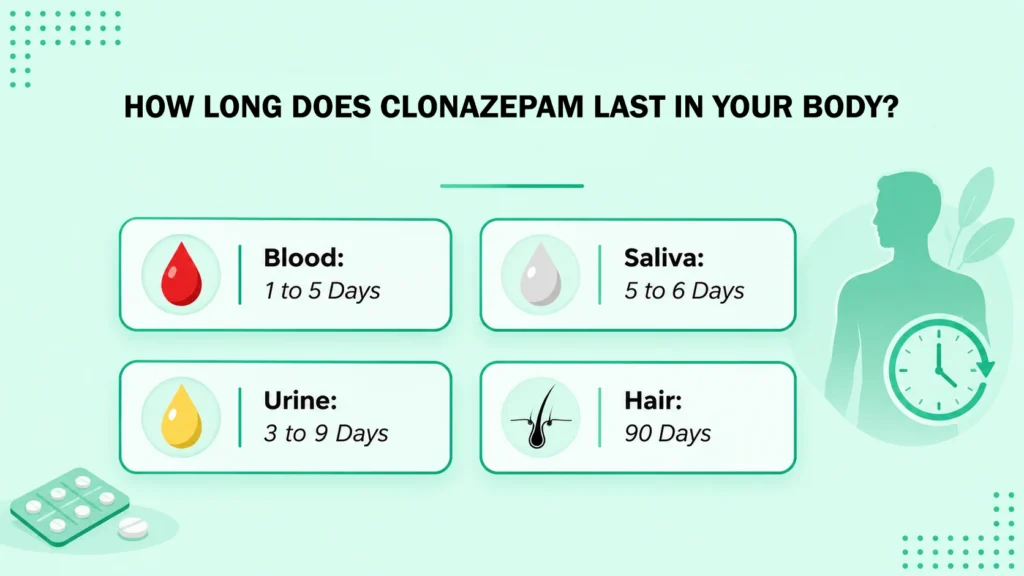
Clonazepam often lasts in your body for 6 to 9 days. The duration of Klonopin in different parts of the body varies, affecting the detection timeline. There are different types of drug tests, which are commonly used to detect the presence of clonazepam in the system. Here are the common tests for Klonopin detection.
How Long Does Klonopin Stay in Blood?
Clonazepam may stay in your blood for approximately 1 to 5 days after the last dose. It offers a shorter detection window than the urine test. Klonopin is usually cleared from the bloodstream with the passage of time.
How Long Does Clonazepam Last in Urine?
Klonopin may last in your urine for an estimated 3 to 9 days after taking a single dose. However, traces remain detectable for up to 30 days for heavy or chronic use. A urine test usually detects 7-aminoclonazepam, a metabolite created due to the processing of Klonopin.
How Long Does Rivotril Stay in Saliva?
Clonazepam is often detectable in saliva for approximately 5 to 6 days. Dosage and metabolism are some of the factors influencing the presence of Rivotril in the saliva. It is important to remember that detection depends on specific circumstances.
How Long Does Klonopin Last in Hair?
Clonazepam, or Klonopin, commonly lasts in hair follicles for approximately 90 days. However, it is not a common drug testing option due to a lack of detection of recent use. Klonopin and its metabolites may take 5-7 days to appear and become detectable in hair.
Looking to Remove Klonopin from Your Body Safely?
Consider the medically supervised detox program at House of Zen to remove clonazepam safely.
What are Factors Influencing Duration of Klonopin in a System?
Clonazepam is a generic prescription medication for treating different disorders, including panic attacks and seizures. There is a long half-life of Klonopin that means it needs several days to clear itself from the body. There are different factors affecting the presence of clonazepam in the body.
Age
Young individuals often metabolize Klonopin more quickly than elderly ones. Elderly people usually experience slower metabolism due to aging. The half-life of clonazepam is significantly extended for older people, prolonging the detection window.
Genetics
Genetic variation in drug metabolization also affects the elimination of clonazepam from the system. It influences how liver enzymes (CYP3A4) can break down and remove the medication from the individual’s body.
Dosage
The dose is one of the major factors influencing the detection of clonazepam or Rivotril in the system. Higher doses often take longer for clearance and extend the detection window. This means occasional Klonopin use may reduce the detection window.
Metabolism Speed
Individuals with a quicker metabolism rate may feel the effects of the medication sooner and also process it faster. However, slower metabolism indicates that individuals feel effects more slowly and extend the detection window.
Food Consumption
Taking clonazepam on an empty stomach may result in faster absorption with immediate effects. However, taking a high-fat food before taking the medication may delay absorption. However, food consumption does not affect the duration of Rivotril in the body.
Body Composition and Weight
Body weight and composition affect the distribution and storage of Klonopin in the fatty tissues. This fat-soluble medication may take significant time for elimination from the body for individuals with a higher body fat percentage.
Duration and Frequency of Use
Frequent and regular clonazepam use causes it to remain in the body for a longer time and slow down the elimination process. Heavy or chronic Klonopin consumption also makes it detectable for a longer time.
Kidney and Liver Health
Healthy liver and kidneys are capable of processing clonazepam quickly from the body. However, impaired kidney and liver function usually slow the processing, extending half-life and detection time.
pH and Concentration of Urine
A higher pH value may lead to the quicker removal of the medication from the system. On the other hand, acidic urine usually slows down the excretion of clonazepam. Highly concentrated urine offers easy detection. Diluted urine often results in values below a test’s cutoff threshold.
Other Medications or Drugs
Certain drugs or substances influence how CYP3A4 breaks down Klonopin for elimination from the system. CYP3A4 inhibitors may slow down the removal process of clonazepam, extending the detection window due to a longer half-life.
💡 Did You Know
An immediate-release tablet of Clonazepam is available in 0.5 mg, 1 mg, and 2 mg. Orally disintegrating tablets (ODT) are available in 0.125 mg, 0.25 mg, 0.5 mg, 1 mg, and 2 mg.
What Is the Half-Life of Clonazepam?
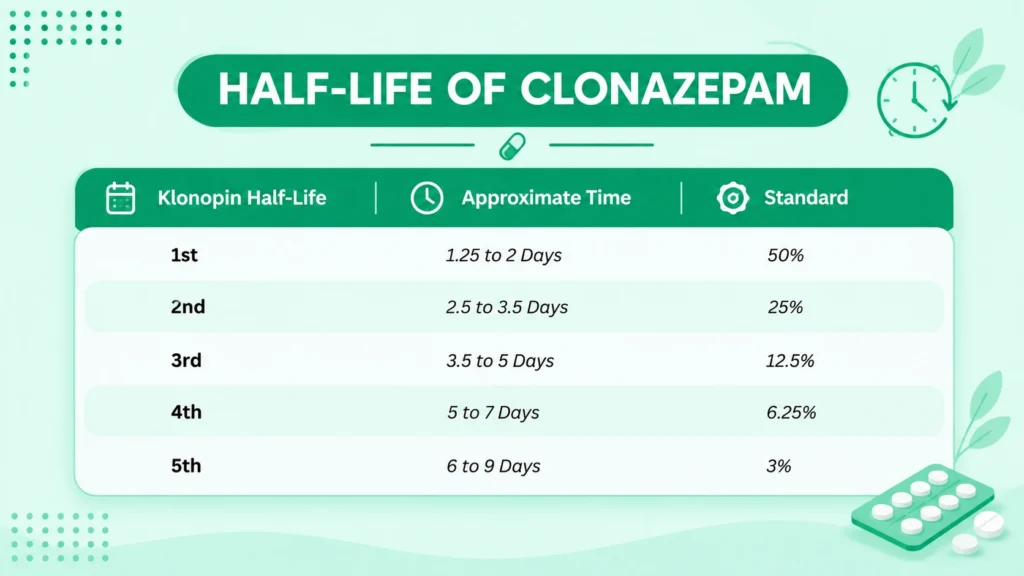
The half-life of Klonopin is approximately 30 to 40 hours. It is the time required to break down and remove half of the clonazepam from the body. This half-life can be extended to 19-60 hours depending on influencing factors. Klonopin may require approximately 5 half-lives (6-9 days or 150-200 hours) for nearly complete elimination.
The half-life of this medication is longer than other benzodiazepines such as Ativan (Lorazepam) and Xanax (Alprazolam). There is a greater accumulation risk due to the prolonged half-life. Here is how clonazepam is cleared from the body in applicable half-lives in the case of a single dose.
How Dosage and Duration Influence the Half-Life of Klonopin
The base half-life of Rivotril often remains constant at 20 to 40 hours. However, dosage and duration of use affect how clonazepam is accumulated and removed from the system. Taking higher doses and using it for longer than prescribed may extend the half-life and Klonopin detection.
Long-term medication use may develop tolerance and physical dependence, leading to clonazepam addiction. Daily use of the medicine may take 1 to 2 weeks to reach a steady level in the blood. Chronic or heavy clonazepam use may also increase withdrawal risks for individuals.
How Do Individuals Get Addicted to Klonopin?
Clonazepam is known for producing relaxation similar to other benzos such as Alprazolam and Lorazepam. It increases the risk of Klonopin abuse or misuse. Individuals who are using the medication according to a physician’s prescription may experience problematic use.
Tolerance develops when the body adapts to the drug and mitigates the effects. It usually forces individuals to use the medication again and again. Dependence occurs due to long-term use, and the body may not function without the medicine. Using clonazepam frequently or in higher amounts to feel the same level of relaxation indicates benzodiazepine addiction among individuals.
What Are Symptoms of Clonazepam Overdose?
There is a higher risk of overdose when you are using Klonopin too frequently or excessively. The effects of the substance are amplified when combined with other CNS depressants such as opioids or alcohol, increasing life-threatening risks, including coma and breathing problems. Here are the risks of Klonopin overdose.
- Anxiety
- Agitation
- Blurred vision
- Confusion
- Dizziness
- Drowsiness
- Fatigue
- Hallucinations
- Lower blood pressure
- Poor coordination
- Slow breathing
- Slurred speech
- Vomiting
What Are the Risks of Combining Klonopin with Other Drugs?
Mixing clonazepam with other central nervous system (CNS) depressants or substances may change the brain chemistry. The combination of Klonopin and other drugs may lead to slow breathing, sedation, overdose, and death. Using Rivotril with illicit opioids and prescription painkillers may cause respiratory depression in individuals. Alcohol is known as a powerful depressant that intensifies the effects of Klonopin on breathing and coordination.
Mixing clonazepam with other benzodiazepines and non-benzodiazepine sleep medications may cause cognitive impairment and drowsiness. Sedating antihistamines, monoamine oxidase inhibitors (MAOIs), and tricyclic antidepressants may increase the risk of impaired motor control. Using herbal supplements and cannabis alongside Klonopin may worsen motor coordination and dizziness.
Experiencing the Risks of Klonopin Combined with Other Drugs?
Access personalized treatment to reduce the risks of addiction and achieve lasting sobriety.
How Long Do the Effects of Klonopin Last?
The effects of Klonopin may last for 6 to 12 hours, with an onset of 20-60 minutes. Therefore, individuals can feel relief from seizures and anxiety for 12 hours. Individuals may feel the therapeutic effects within a few minutes because this fat-soluble medication increases GABA in the brain. That’s why individuals taking Klonopin may experience sedation and anti-anxiety effects.
How to Get Klonopin Out of Your Body Quickly
There are no safe ways to get clonazepam out of your system faster. It is important to consider the body’s natural process of removing the medication. You can support your natural metabolic rate through a balanced diet, hydration, moderate exercise, and good sleep. You can contact medical professionals for a safe elimination of Klonopin from your body.
Start Your Treatment for Prescribed Benzodiazepine Addiction at House of Zen
Starting your benzo treatment at House of Zen LA is the ideal choice when you are struggling with Klonopin. The certified professionals are always ready to help you overcome clonazepam dependence and overdose risks. Let’s book your free consultation today and start your long-term recovery journey!
Answers to Questions About How Long Klonopin Lasts
Frequently asked questions about how long Klonopin lasts are answered.
How long is Klonopin effective?
Klonopin is effective for approximately 6 to 12 hours. However, the medication itself may remain in the system for a longer time. The exact duration of effectiveness may depend on an individual’s biology.
How long does 1 mg of clonazepam last?
A 1mg dose of clonazepam may last for several hours, varying from person to person. The approximate half-life of Klonopin is around 20 to 40 hours, extending the duration of 1 mg in the system.
Is 1 mg of clonazepam a lot for anxiety?
1 mg of clonazepam is not a lot for anxiety because medical professionals consider it a standard dose of medication to treat the anxious condition, depending on an individual’s medical history.
What is the peak time for Klonopin?
The peak time for Klonopin is approximately 1 to 4 hours. Clonazepam often reaches maximum effects and peak concentration within 4 hours of the last oral dose, depending on medical condition.
Can you feel Klonopin the next day?
Yes, you can feel Klonopin the next day due to the medication’s longer half-life. The body processes the active medicine slowly, extending the effects of the medicine for a longer time.
Can I take clonazepam every day for anxiety?
No, you cannot take clonazepam every day for anxiety because long-term use can cause tolerance and physical dependence. Moreover, individuals may experience the withdrawal symptoms of Klonopin addiction.
